1.
2.
5.
6. 7.
3.
3.
3.
1.
7.
2.

4.
8.
8.
8.
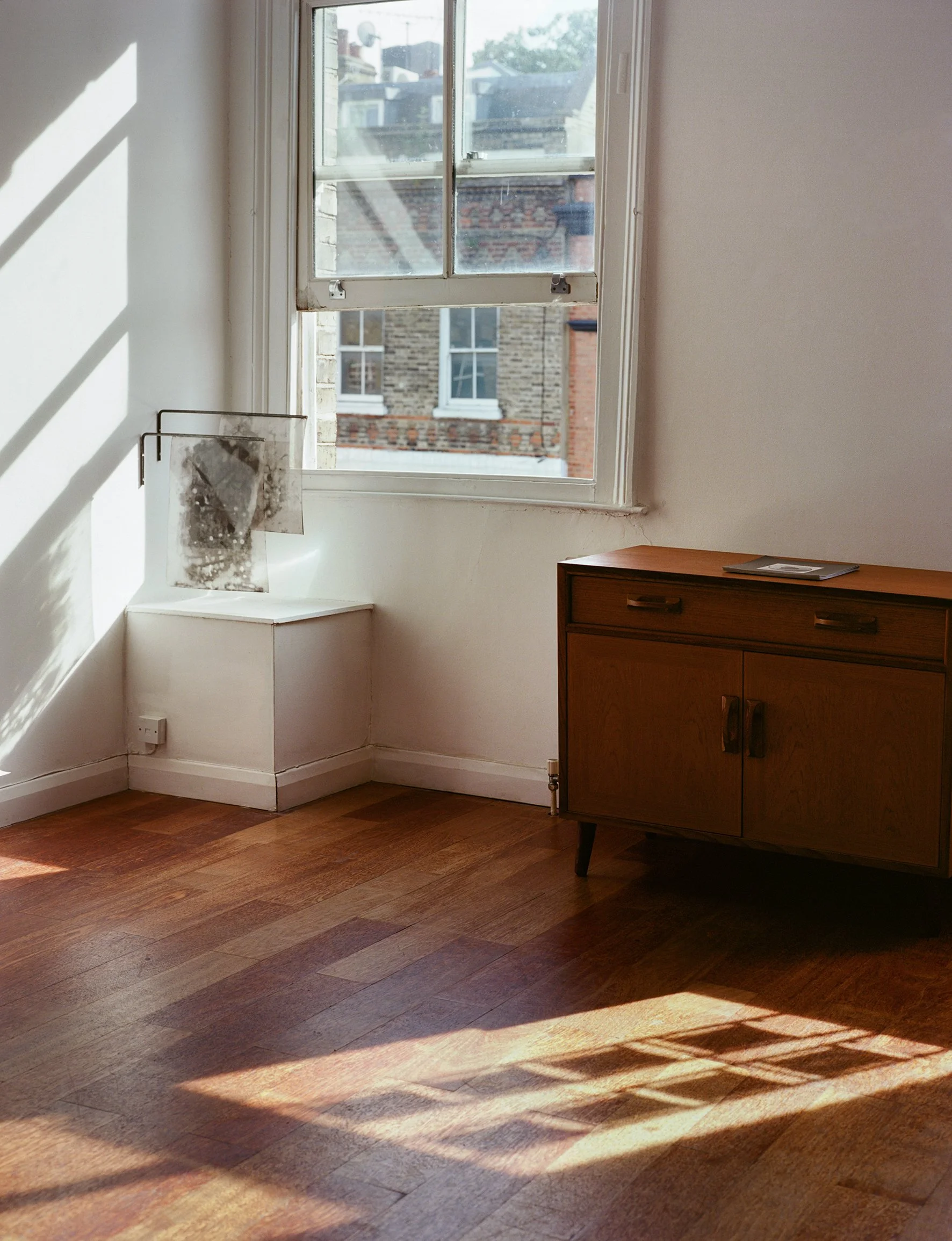
Documentation from Dip & Dunk!, a residency made in collaboration with HAPAX Living Room, London 2026
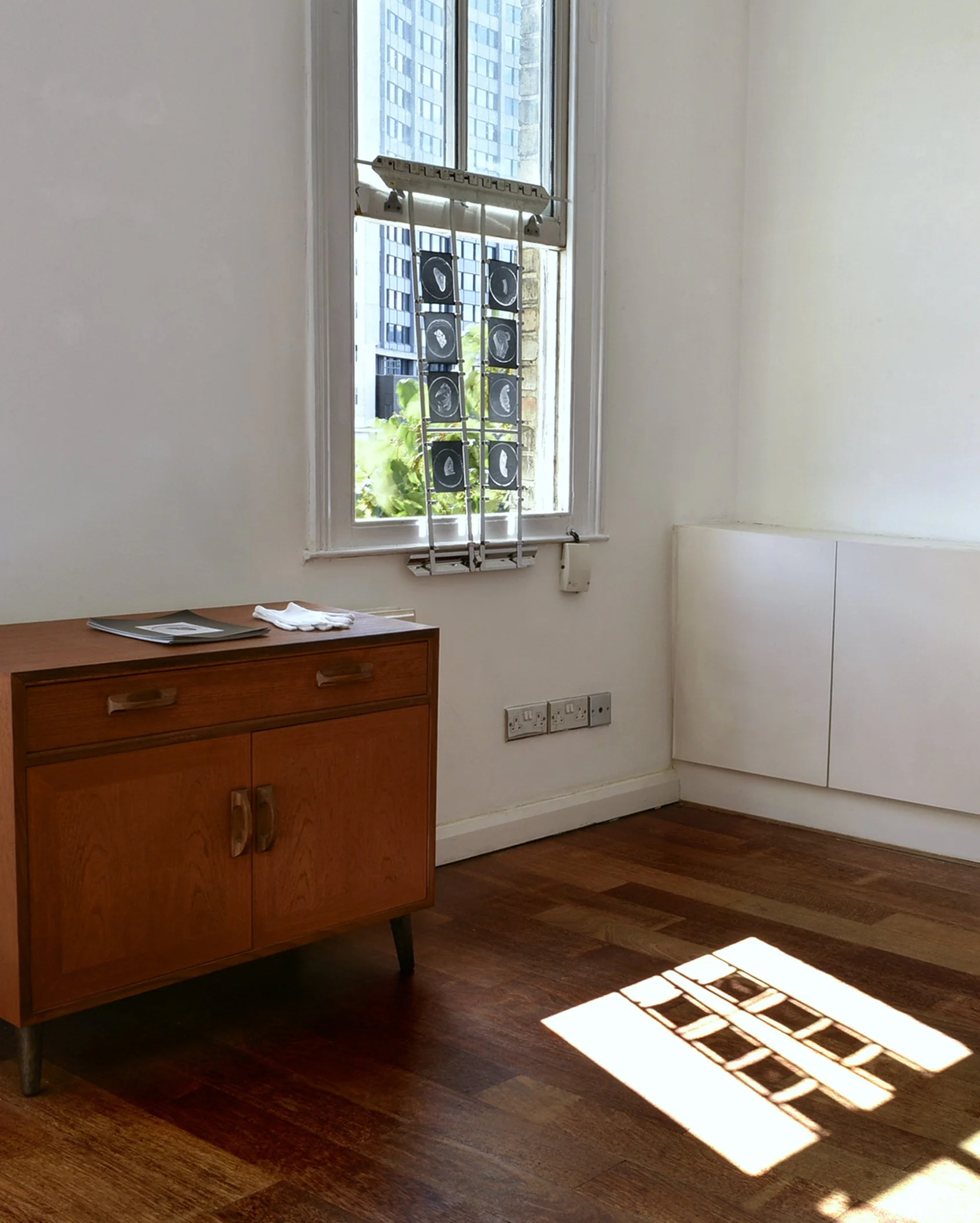
Working with reclaimed photographic materials, Dip & Dunk! stems from found sets of histological slides sourced on eBay. The work traces interconnected histories between medical imaging and photography, and looks at how bodies are interpreted amongst institutional systems of vision.
List of Works
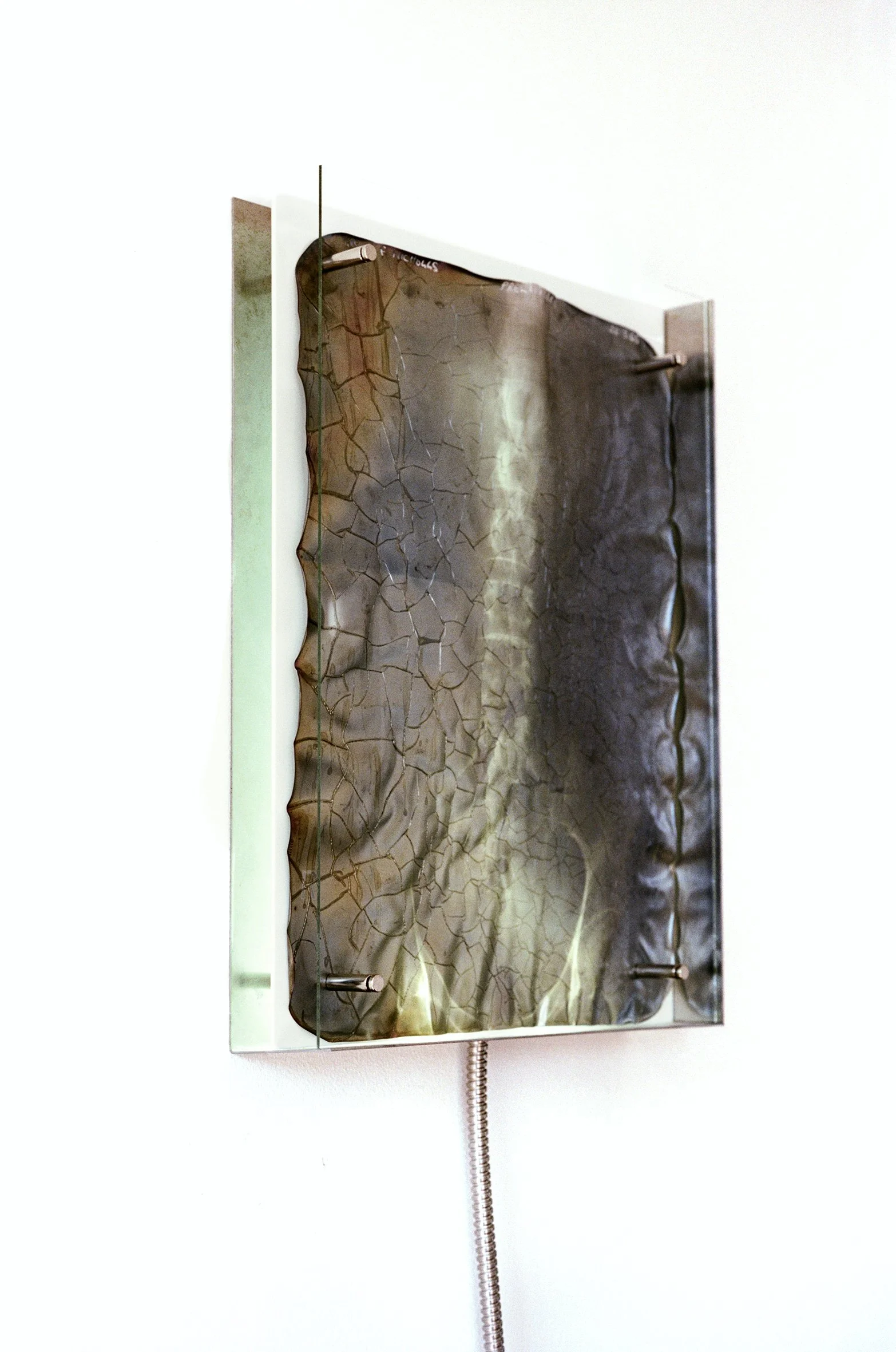
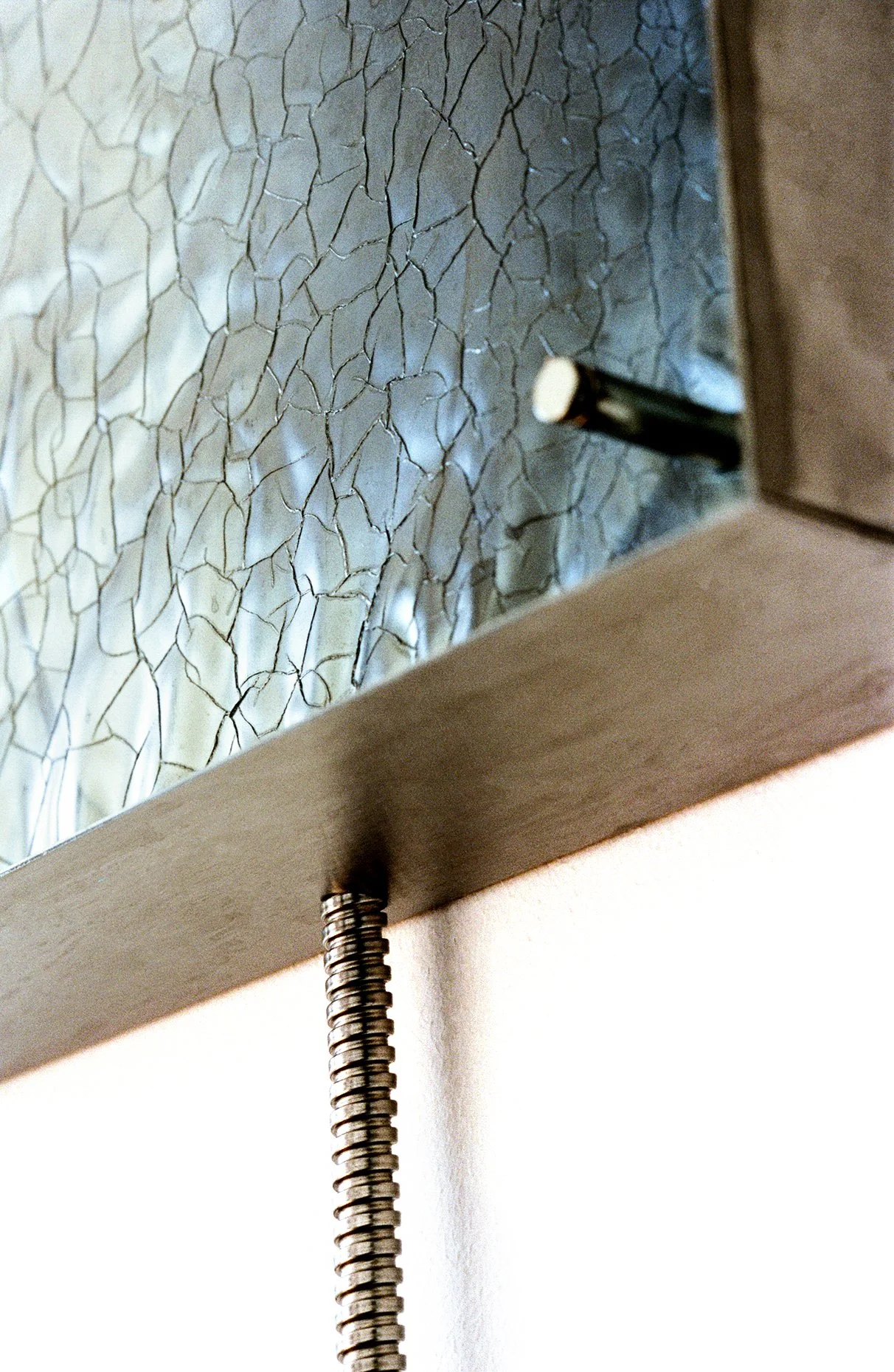
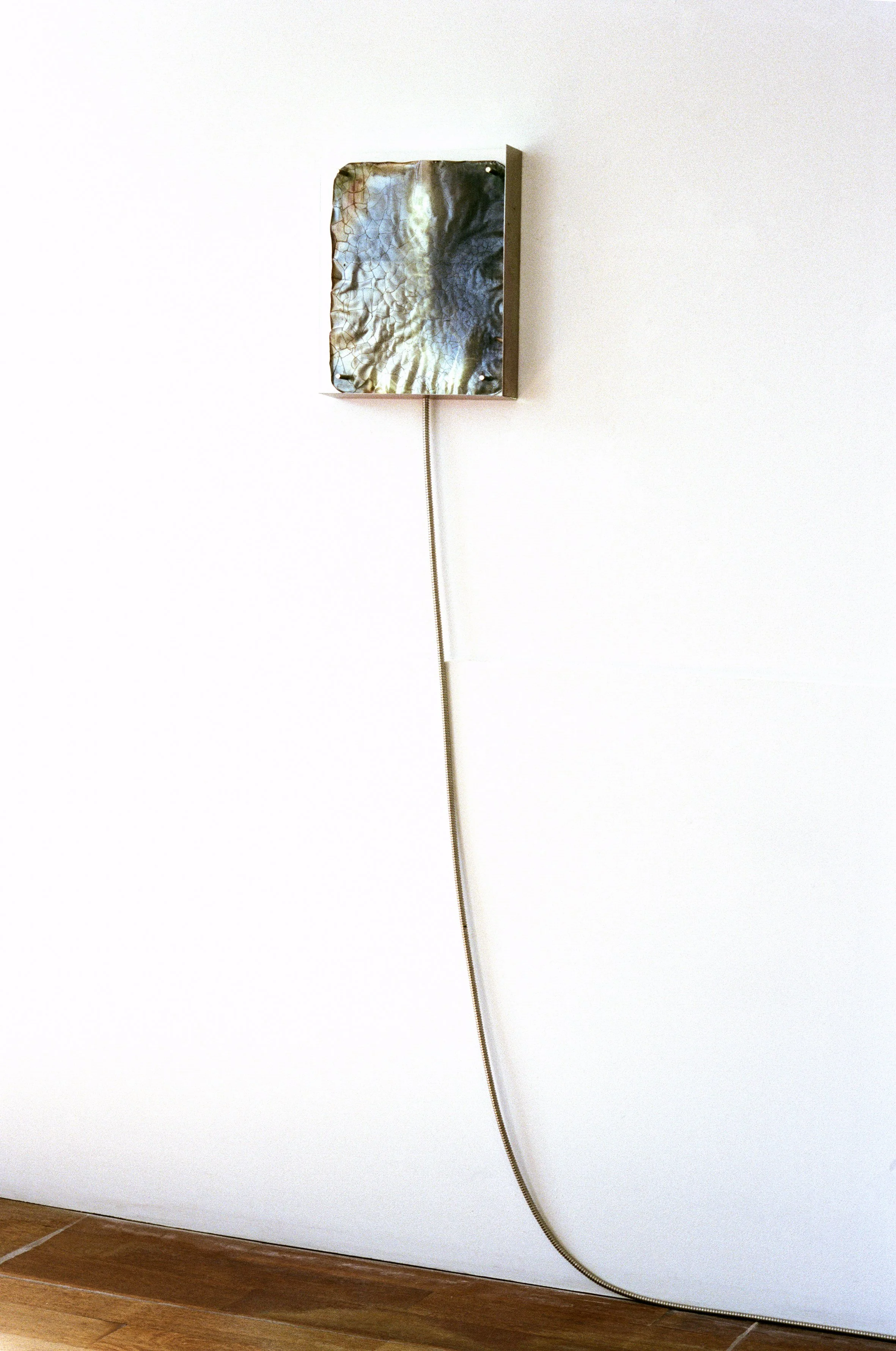
Gastrogaffin colostomy (silver mirroring), 2026, X-ray dated 1966, stainless steel, perspex, glass, LED strip, magnets, galvanised steel flexible conduit
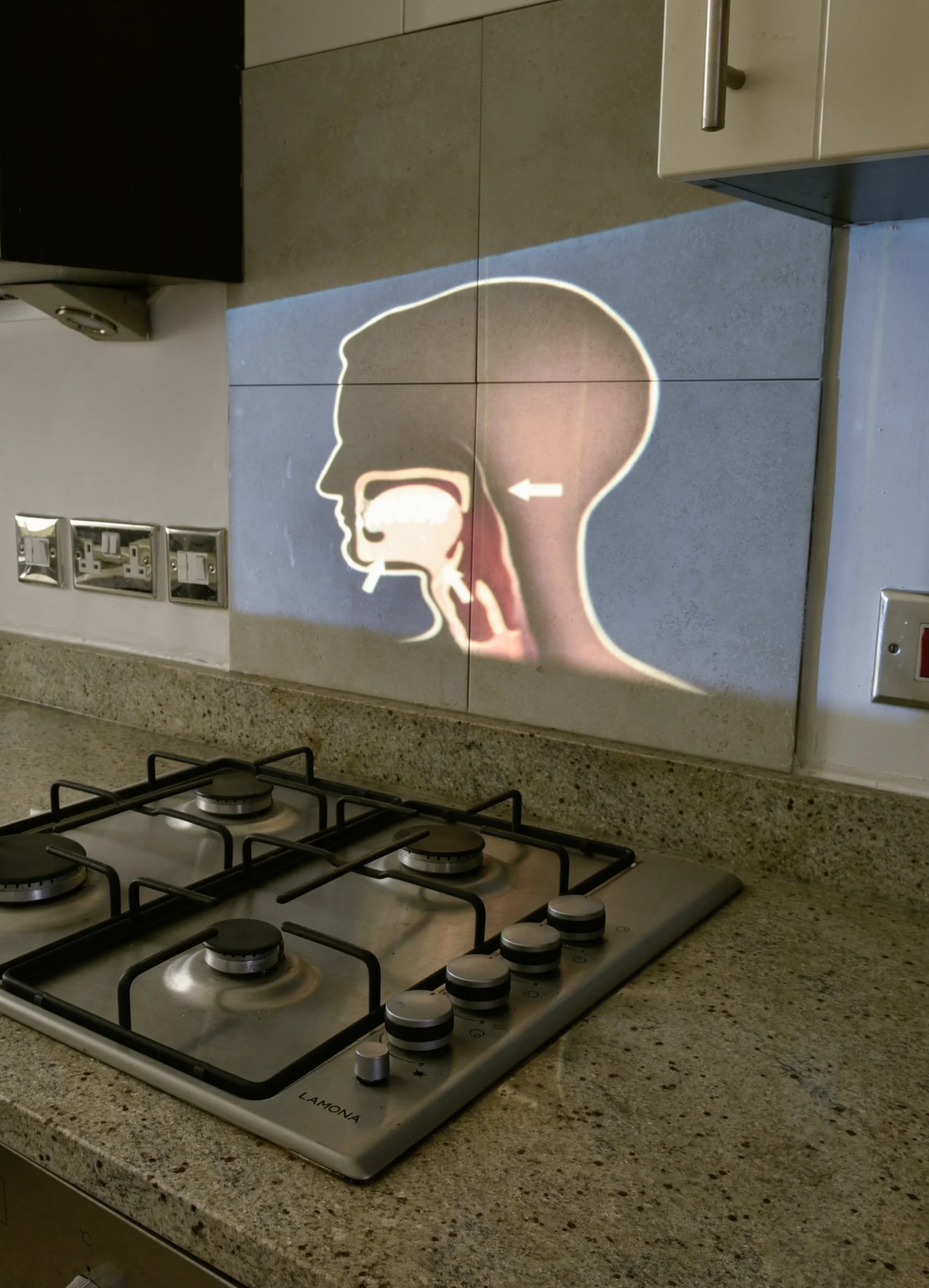
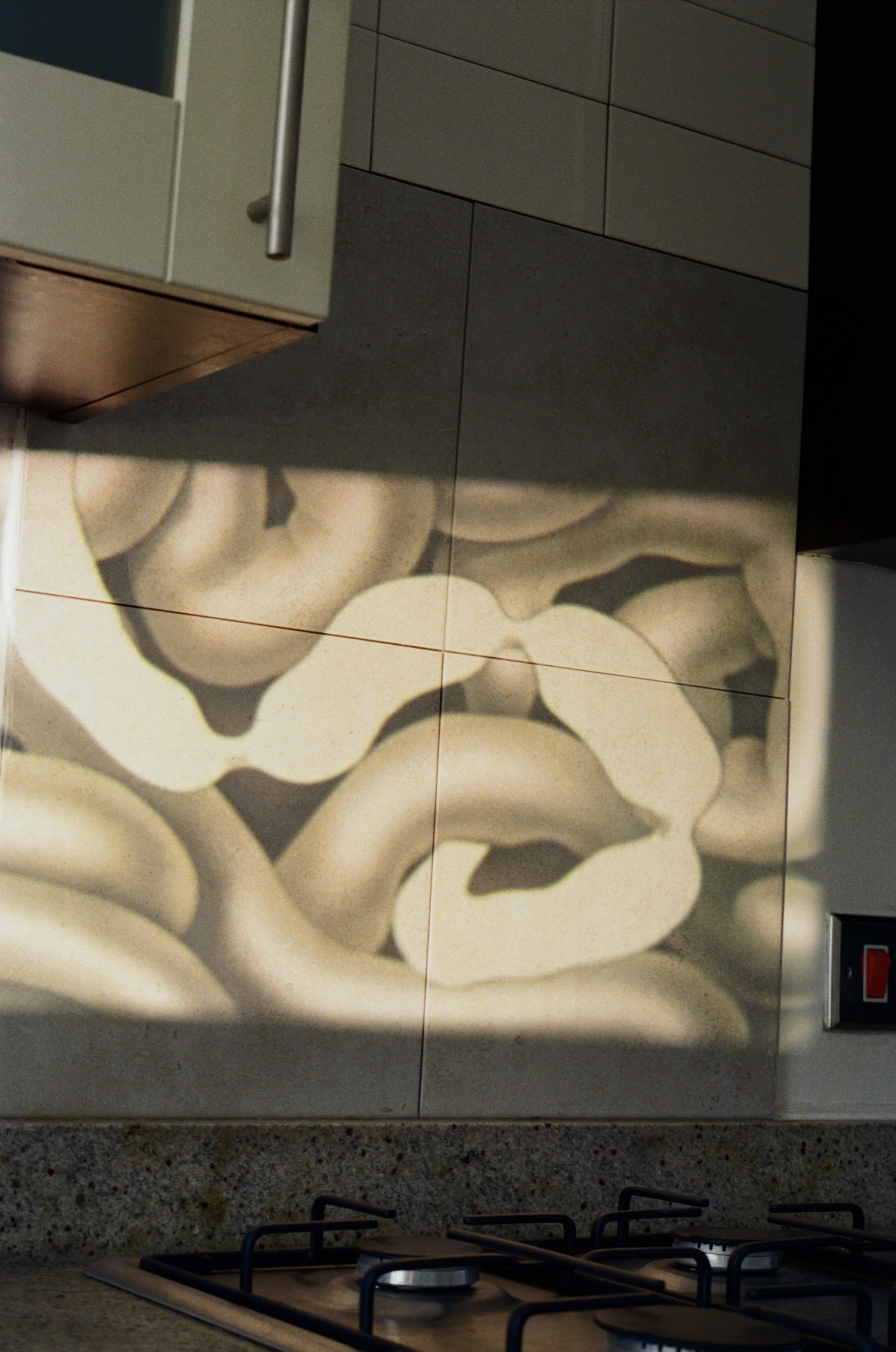
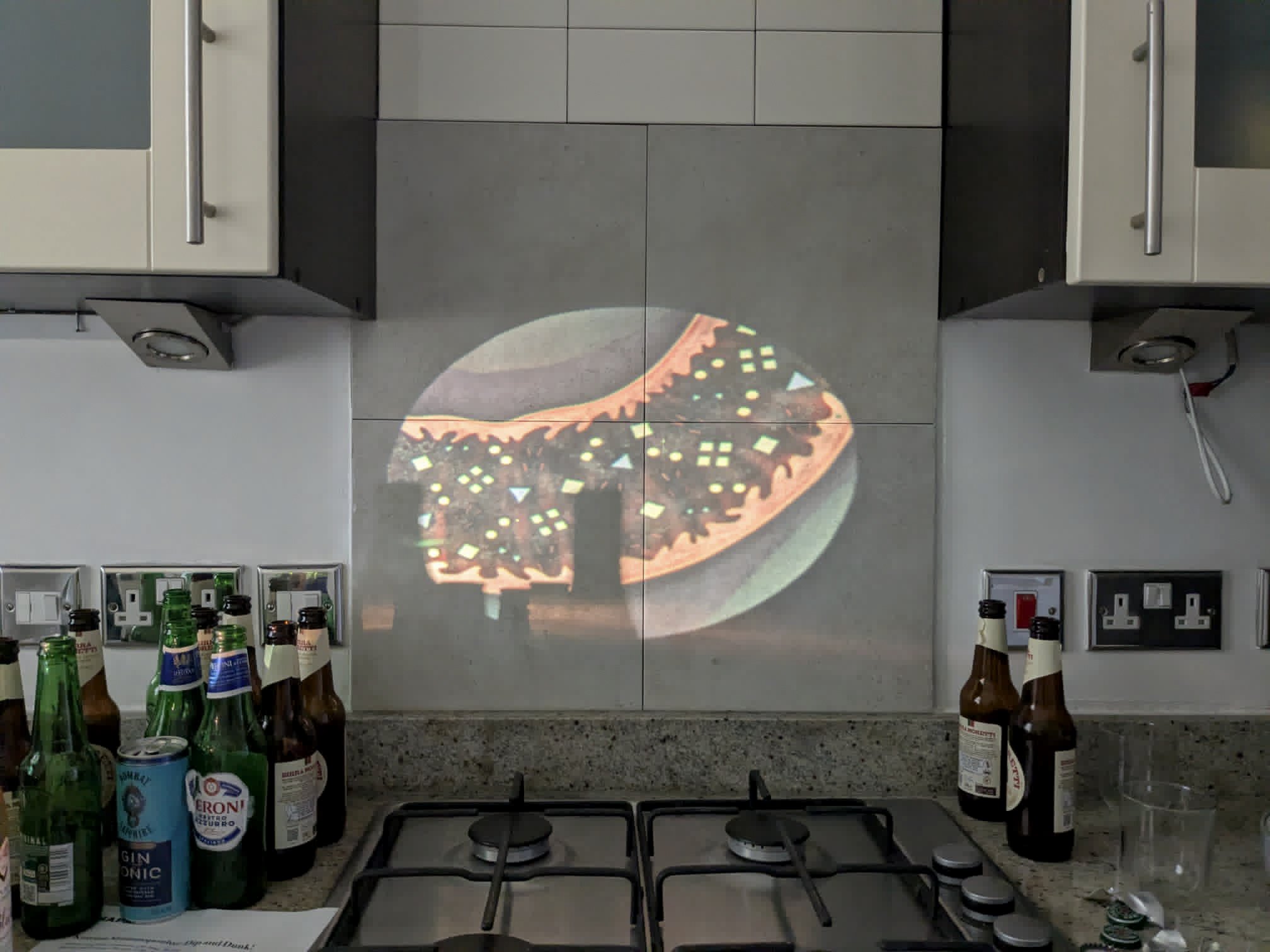
Educational film titled ‘Digestion Part II’, circa 1960’s, 16mm film, 16mm projector
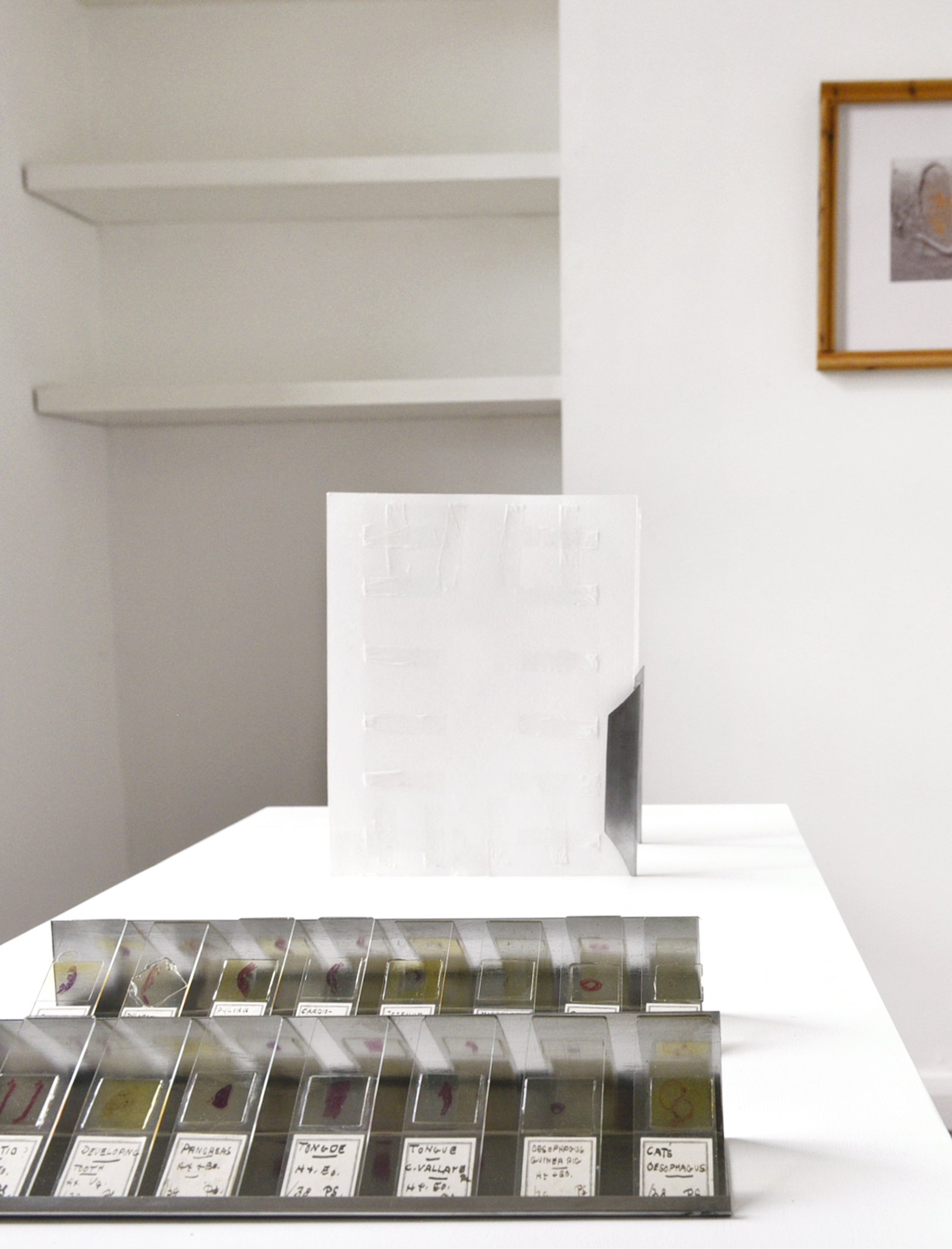
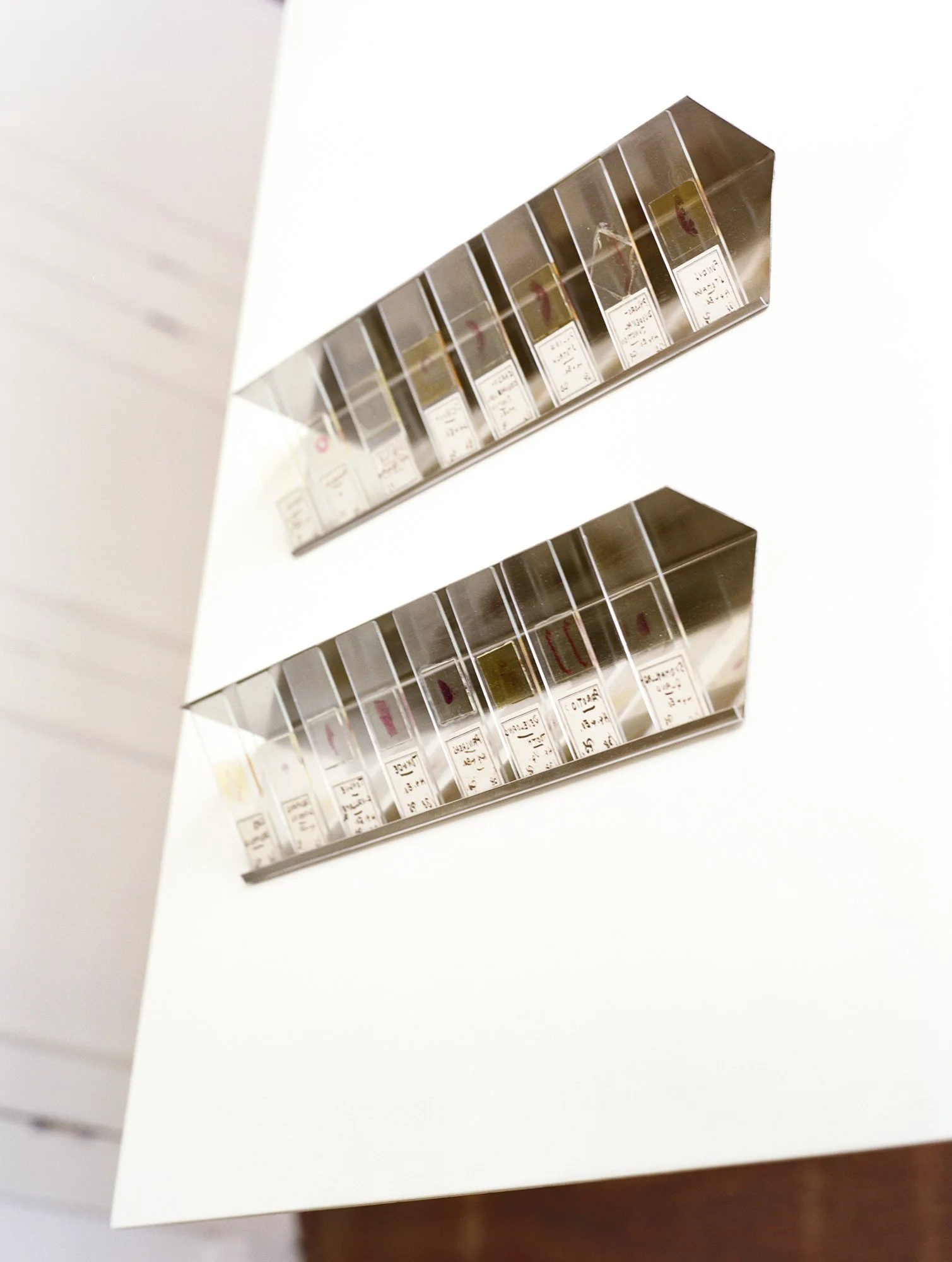
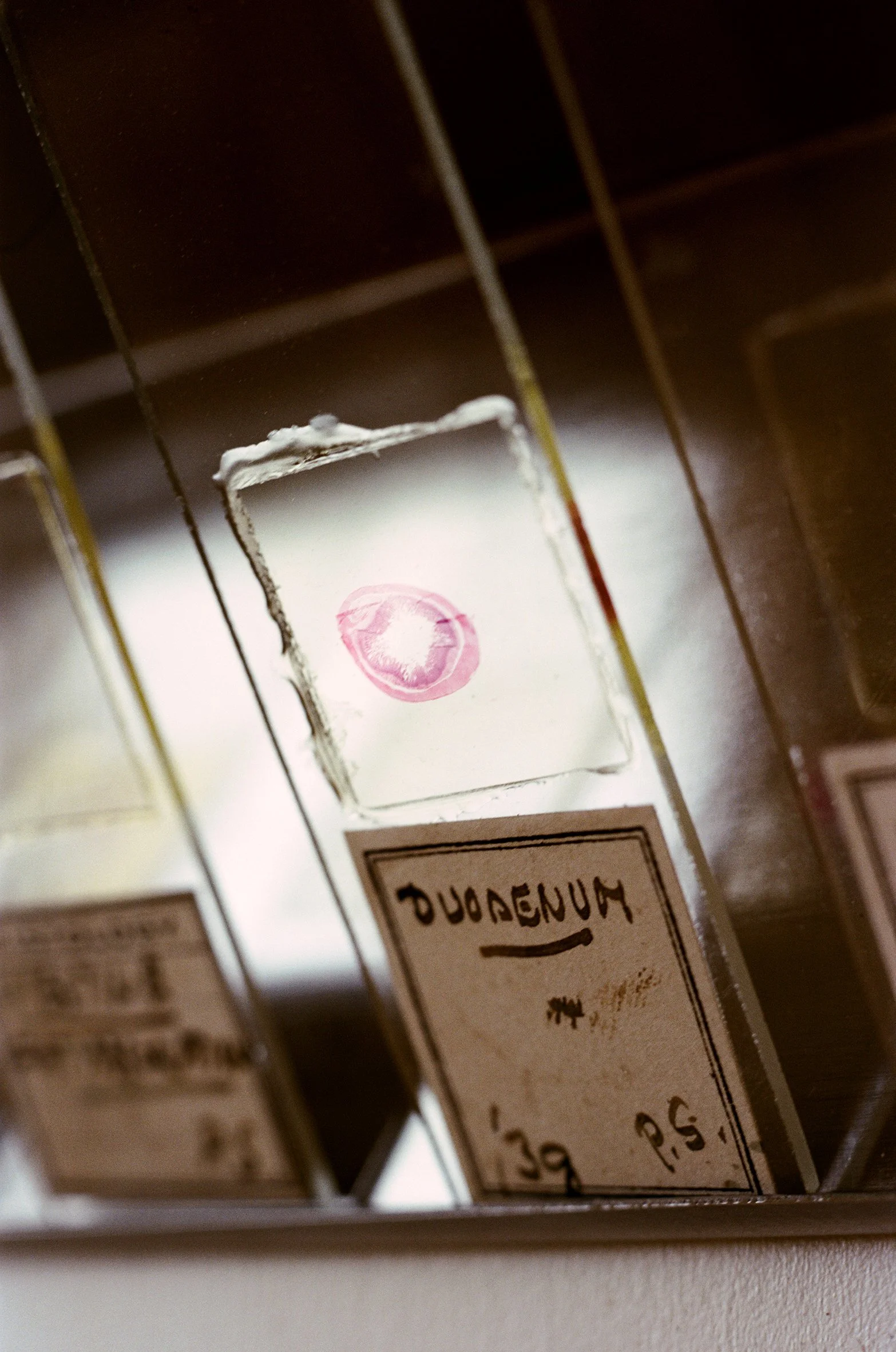
Histology slide set, Alimentary canal, circa 1930, rehoused in reclaimed stainless steel shelves
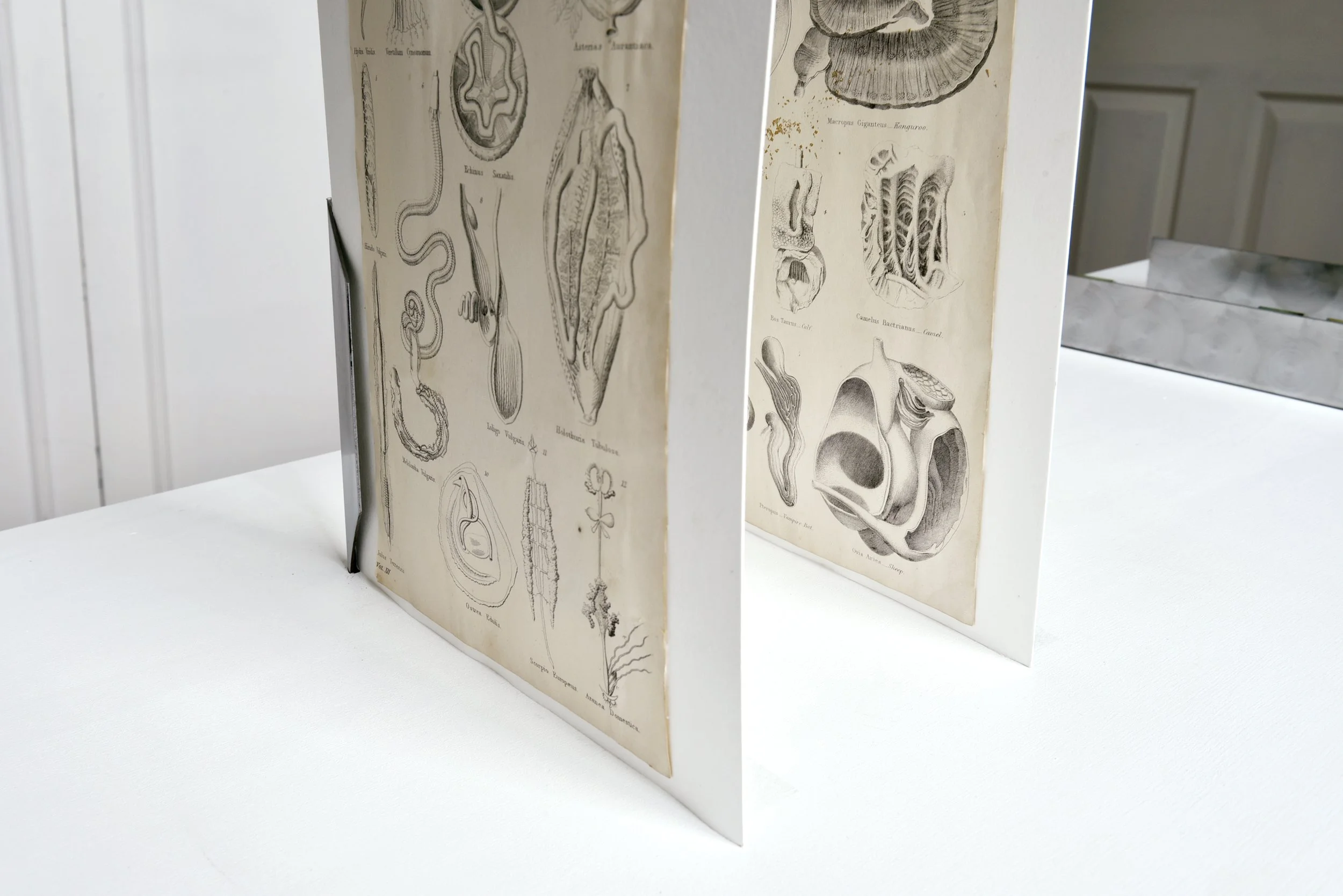
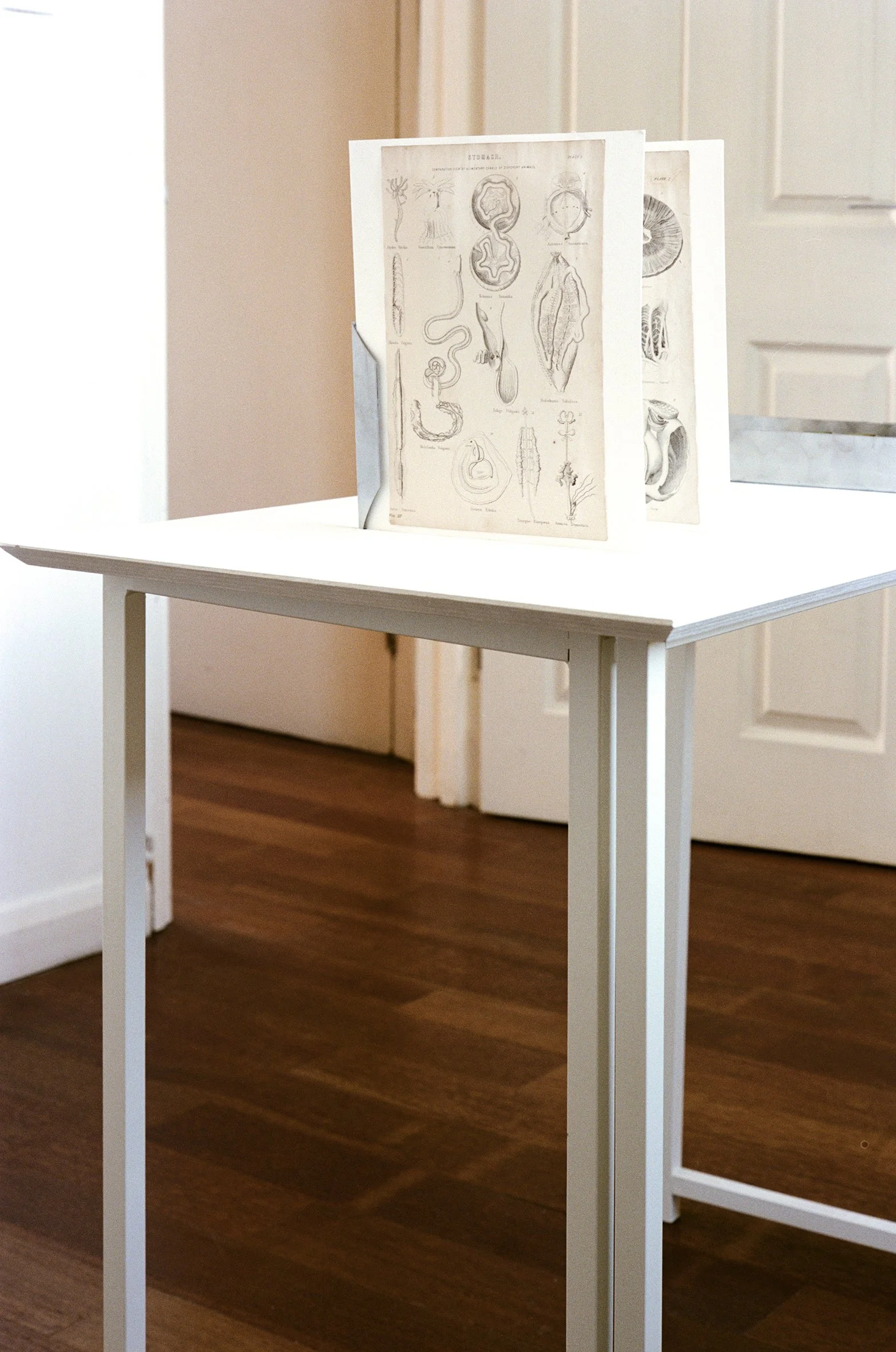
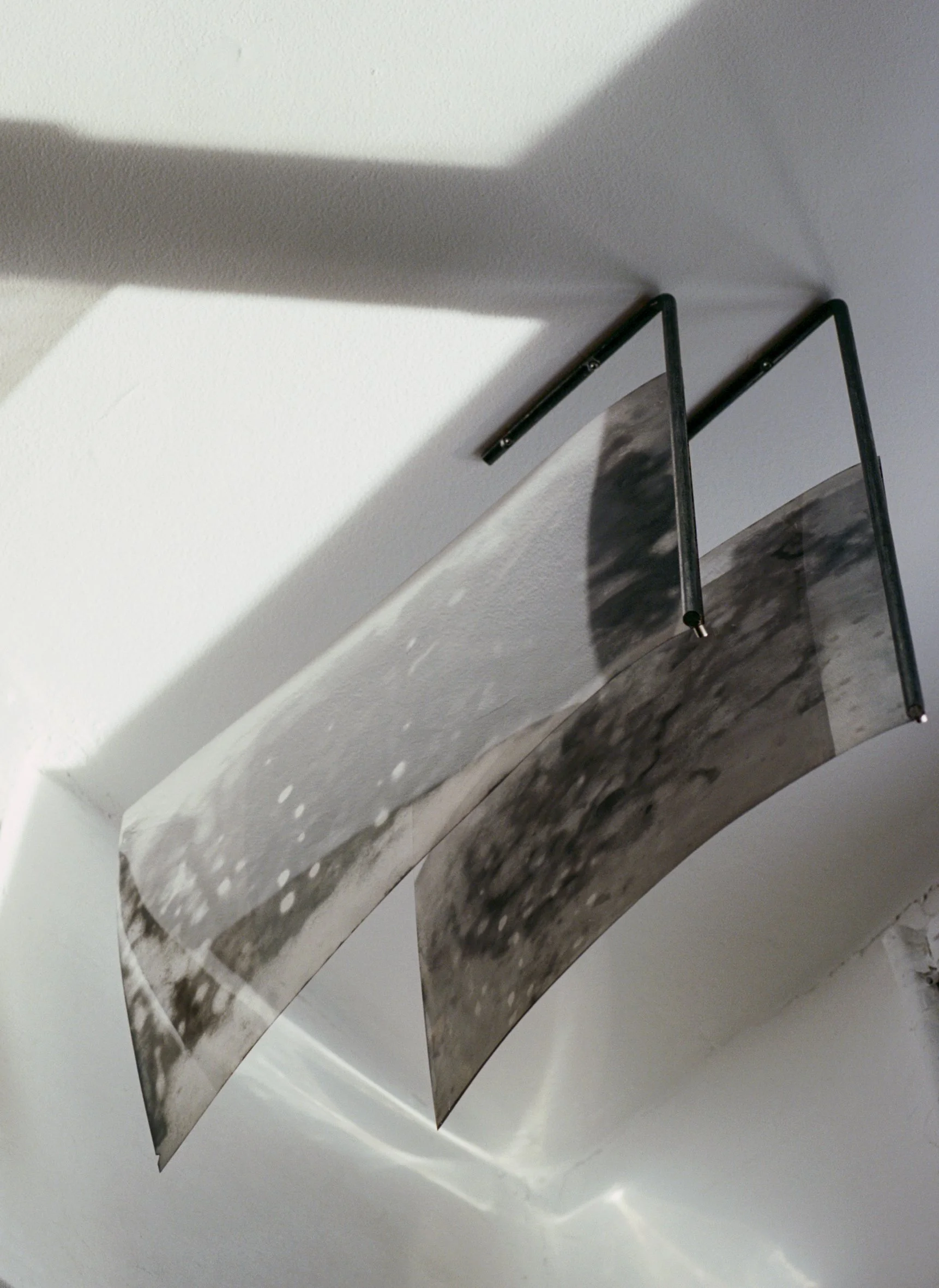
Loose stomach pages from an Encyclopedia dated 1877, Japanese tissue, methyl cellulose, reclaimed stainless steel arms
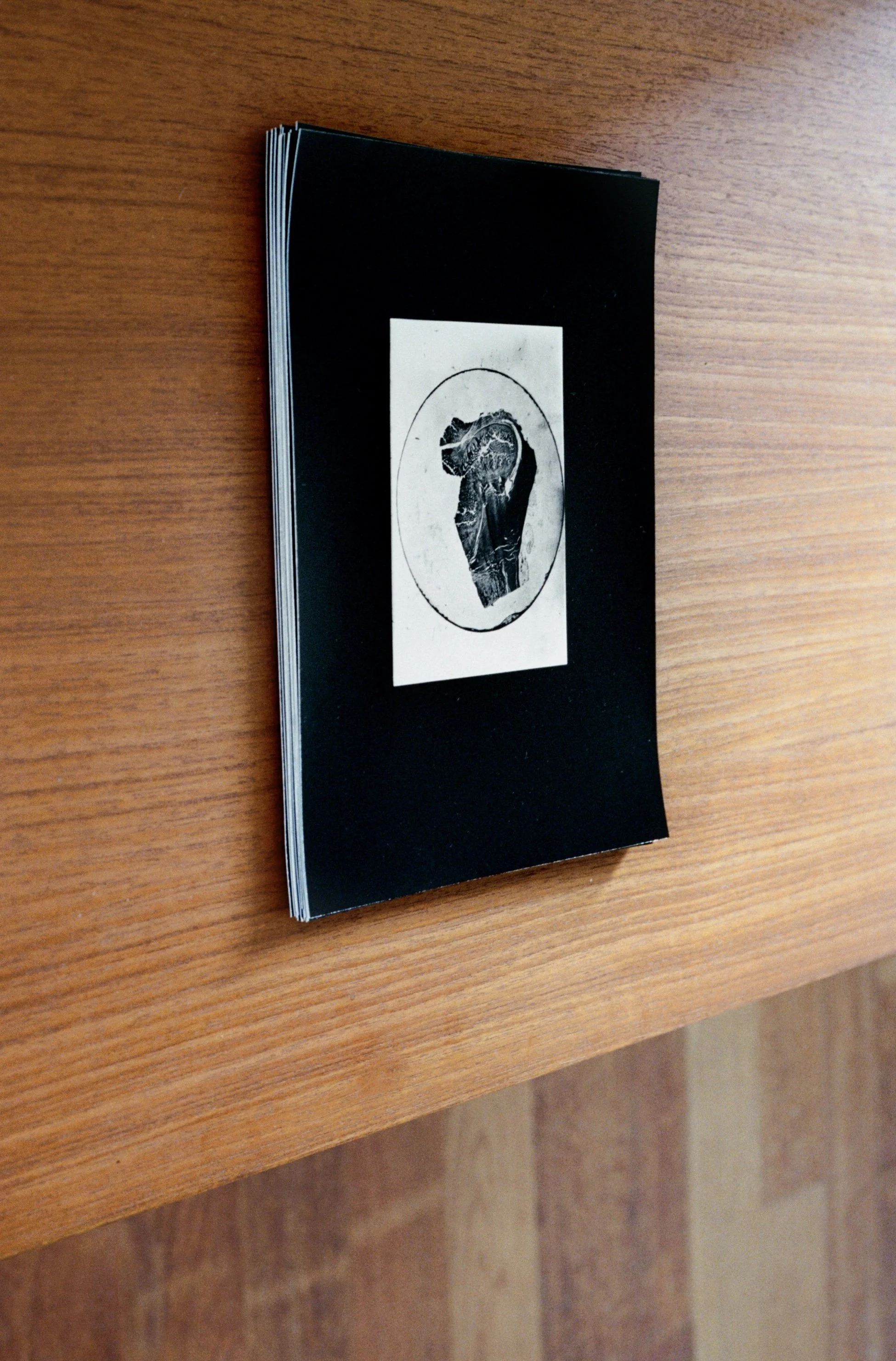
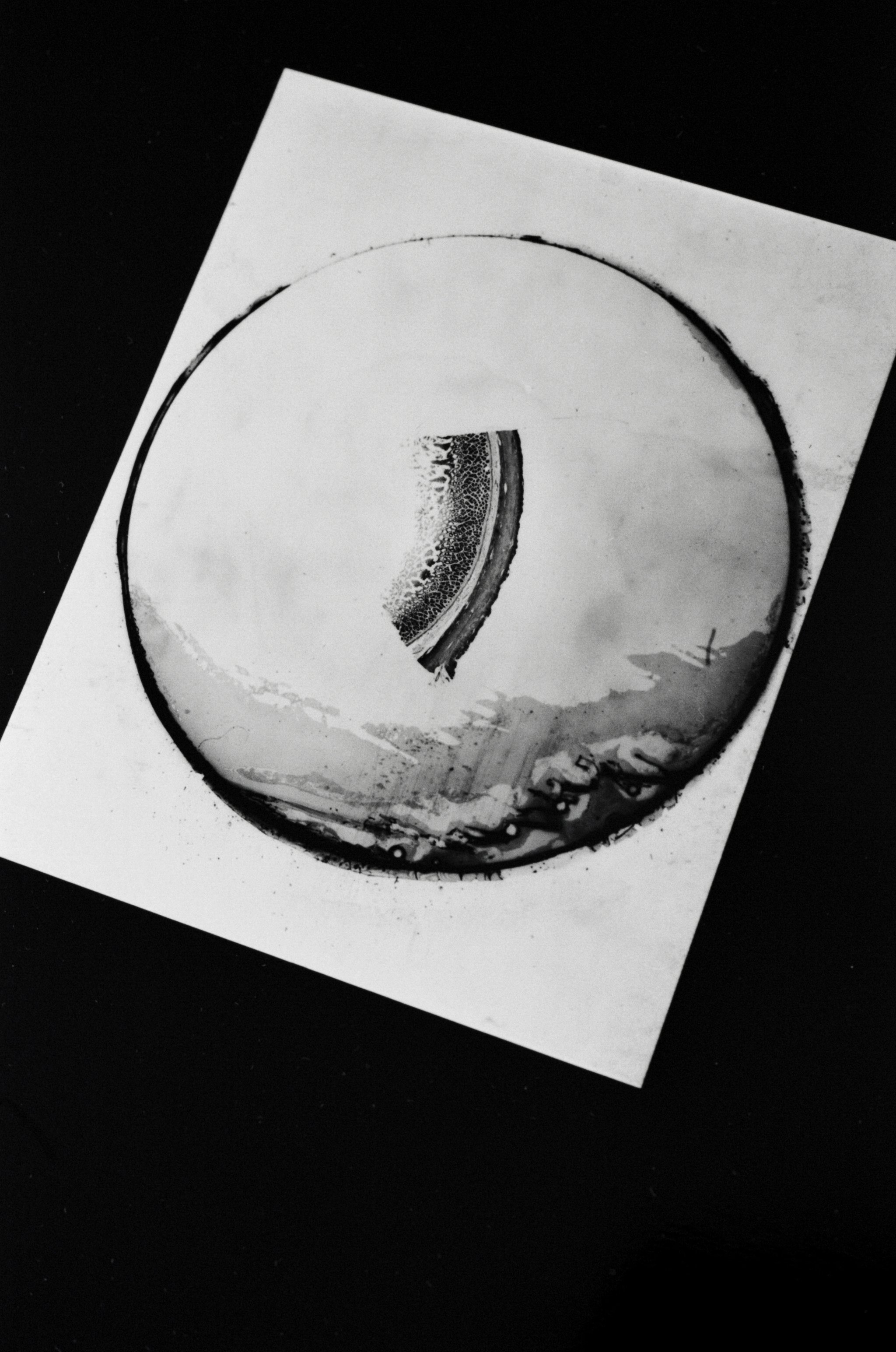
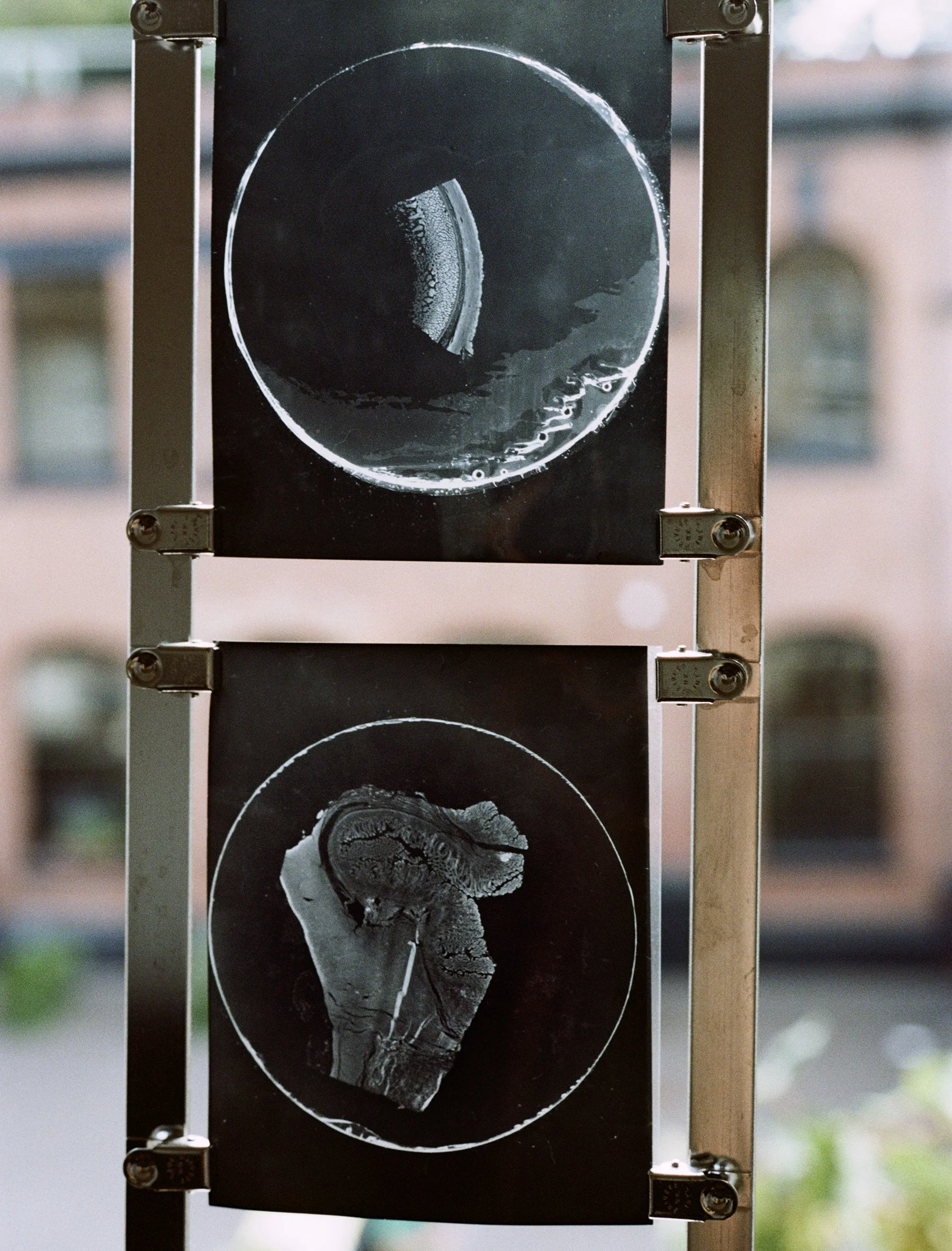
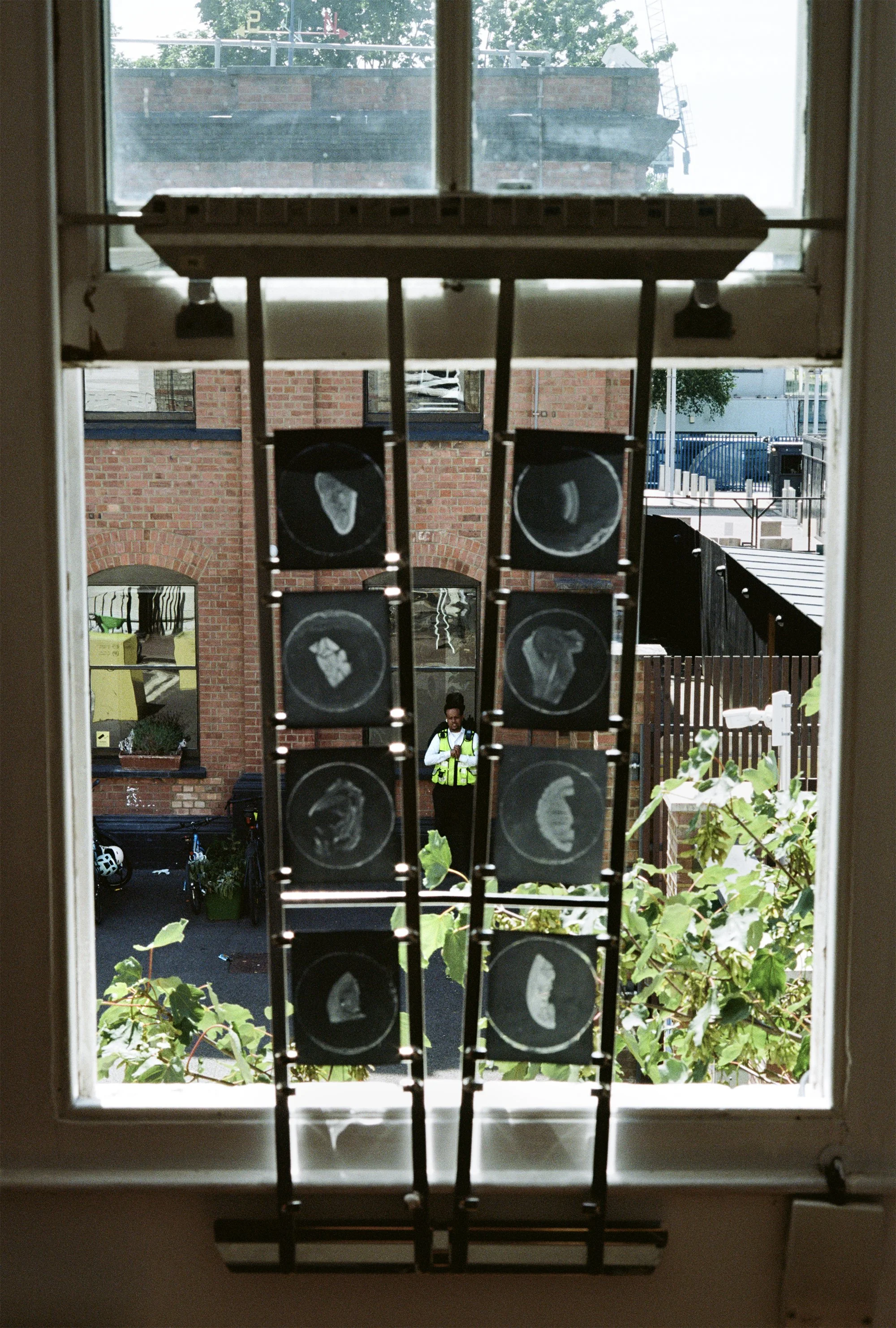
20 piece prepared slide set, 2026 silver gelatin contact prints
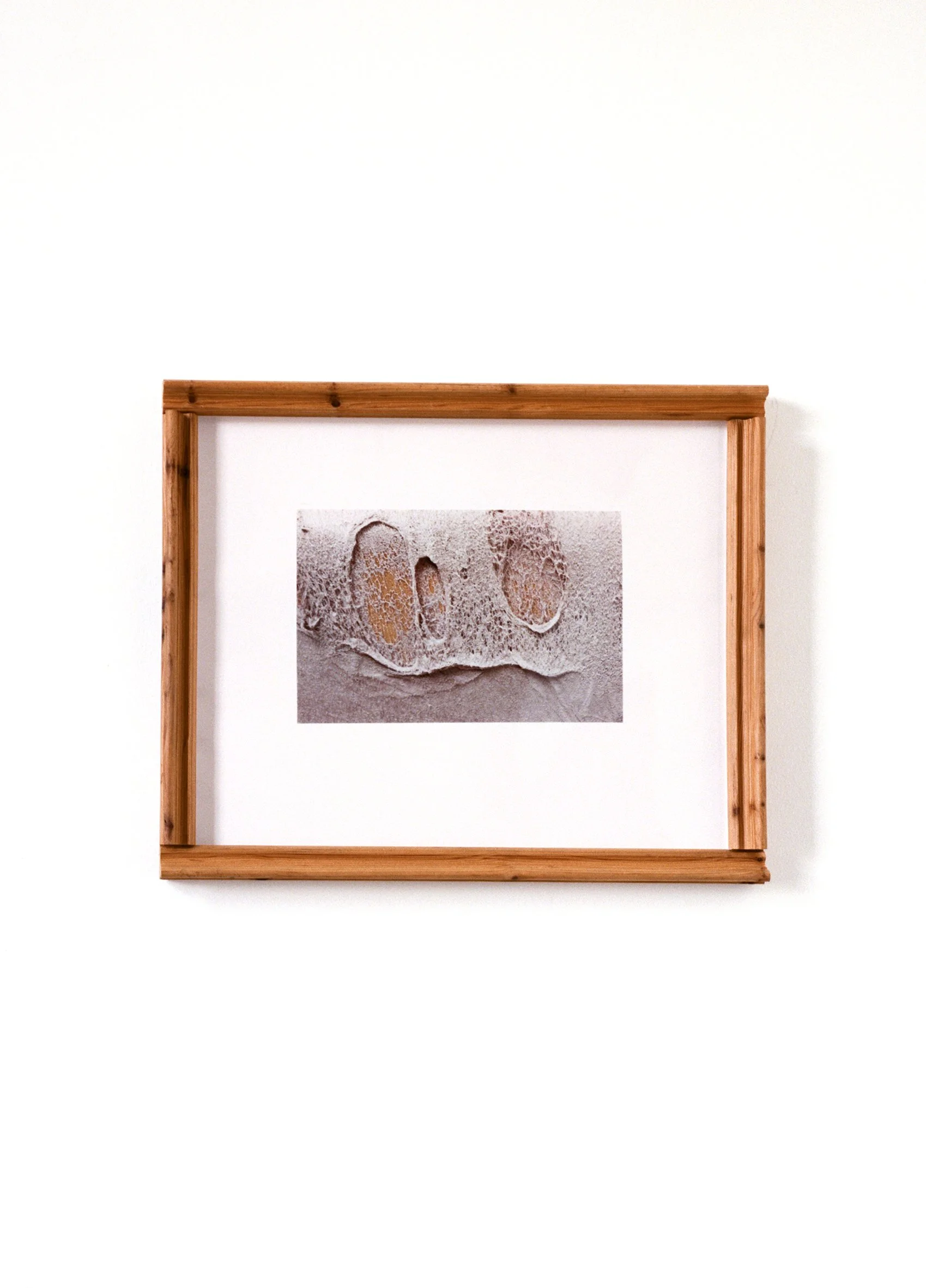
Couch, 2026, c-type hand print, pine reclaimed frame
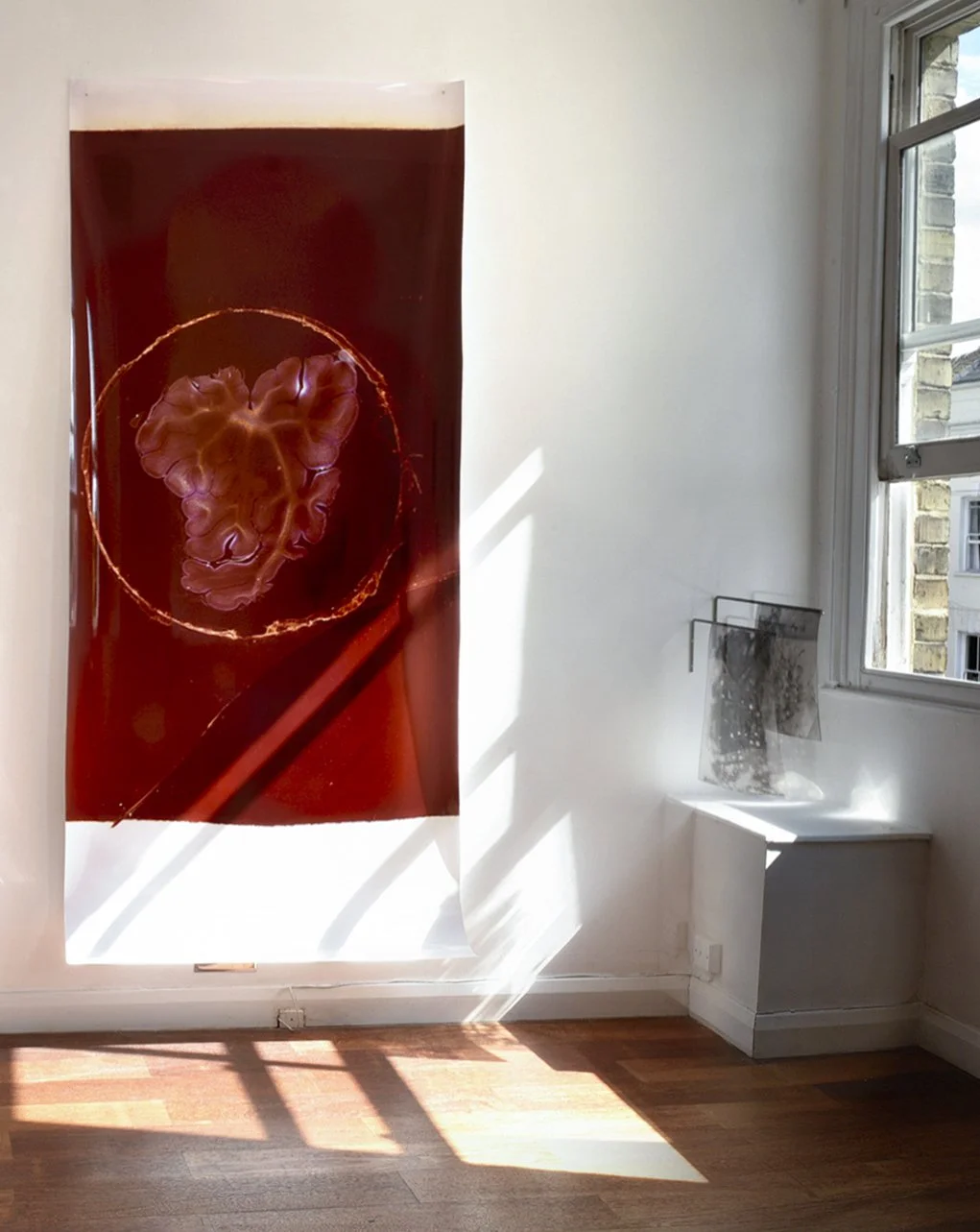
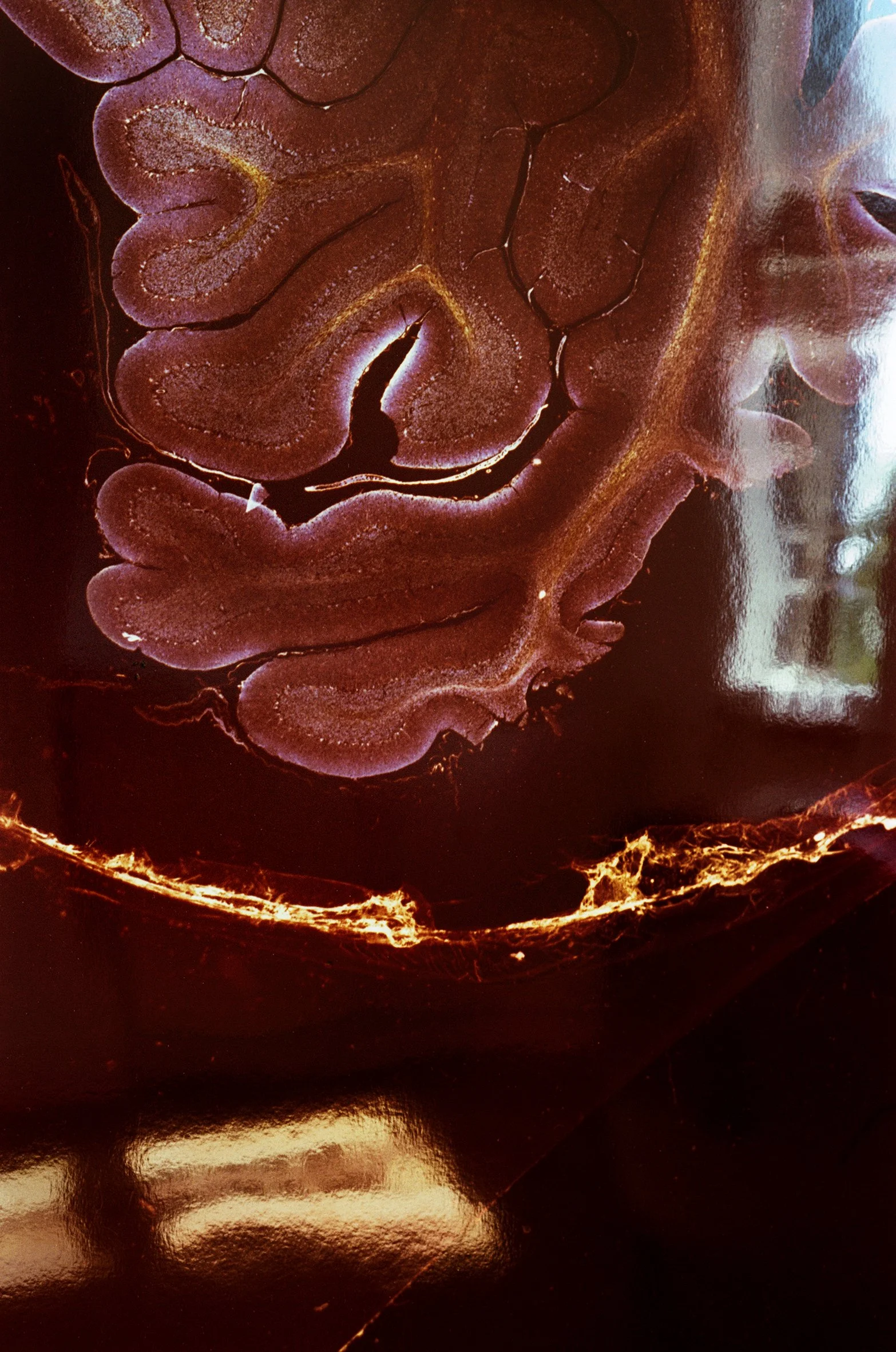
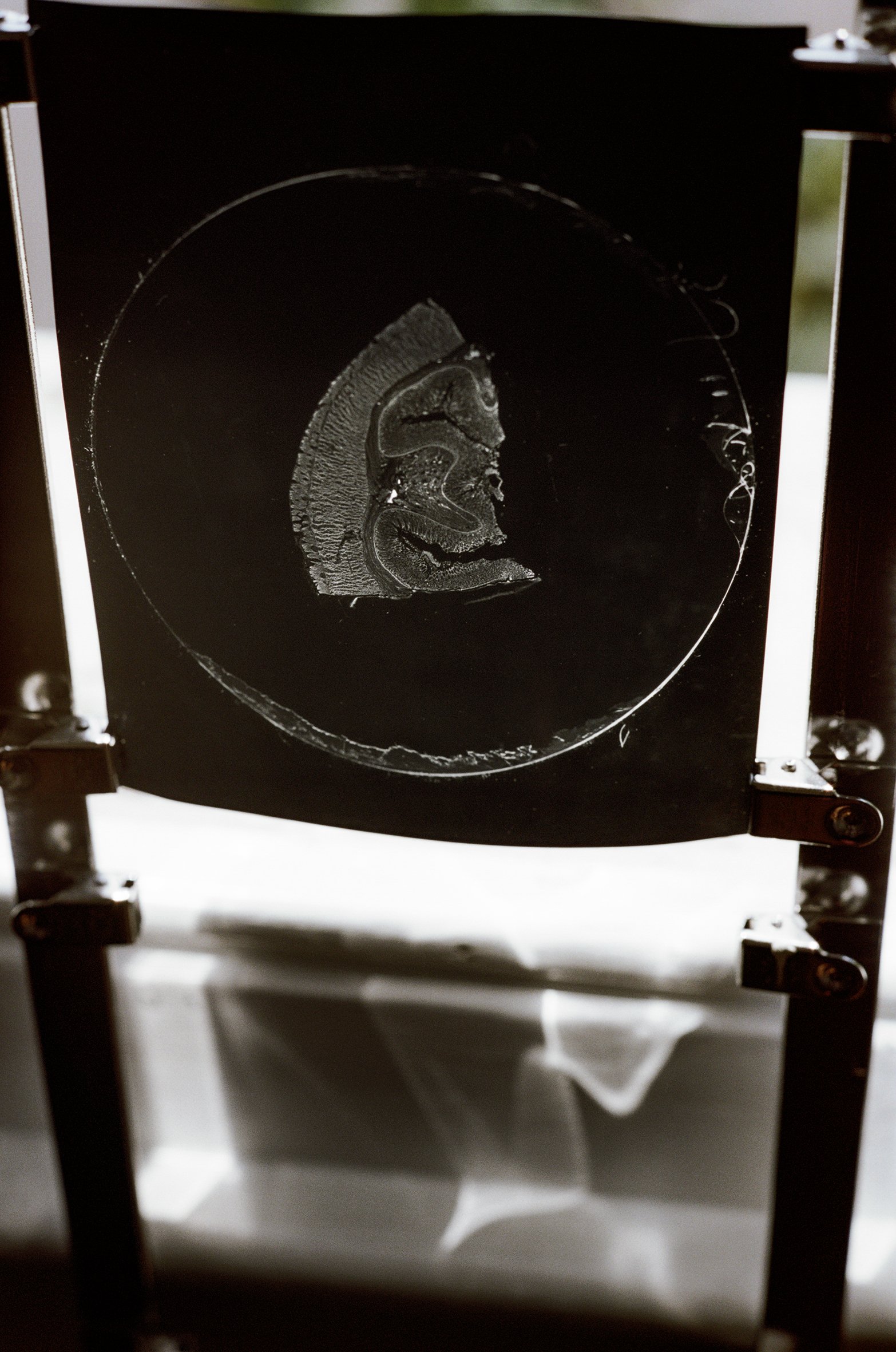
C32 Cerebellum sec (silvering), 2026 unique c-type hand print
Unexposed continuous tone film (expired 2006), developed 2026, reclaimed mild steel, magnets
Slides made on expired orthographic film, 2026 borrowed C41 dip and dunk rack
(left column from top) C68 Tongue I.S Show filiform papilla, C75 Pancreas, C36 Palatine Tonsil, C73 Colon
(right column from top) C71 Jejunum, C03 Pyloric region sec, C72 Large intestine, C13 Small intestine