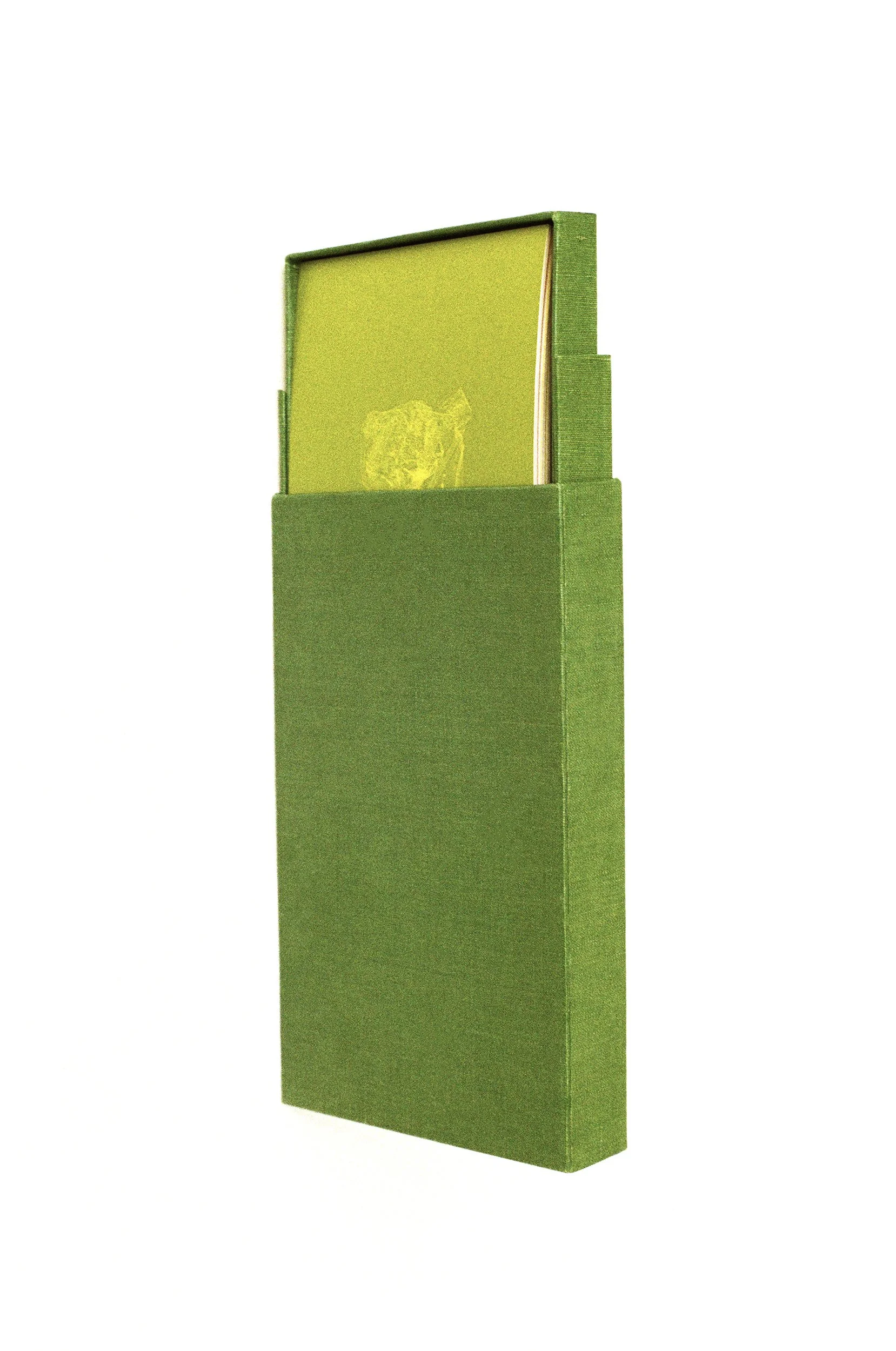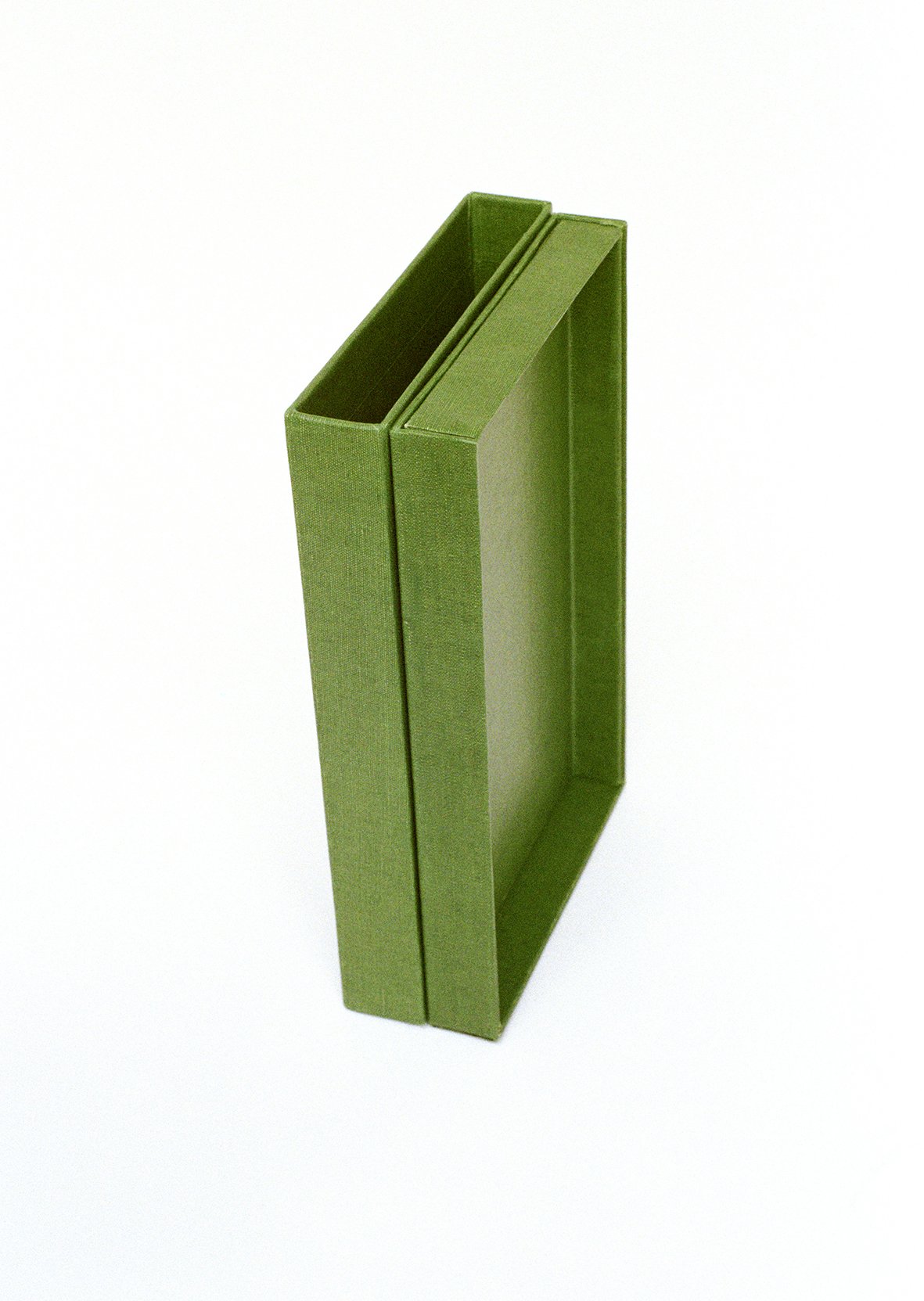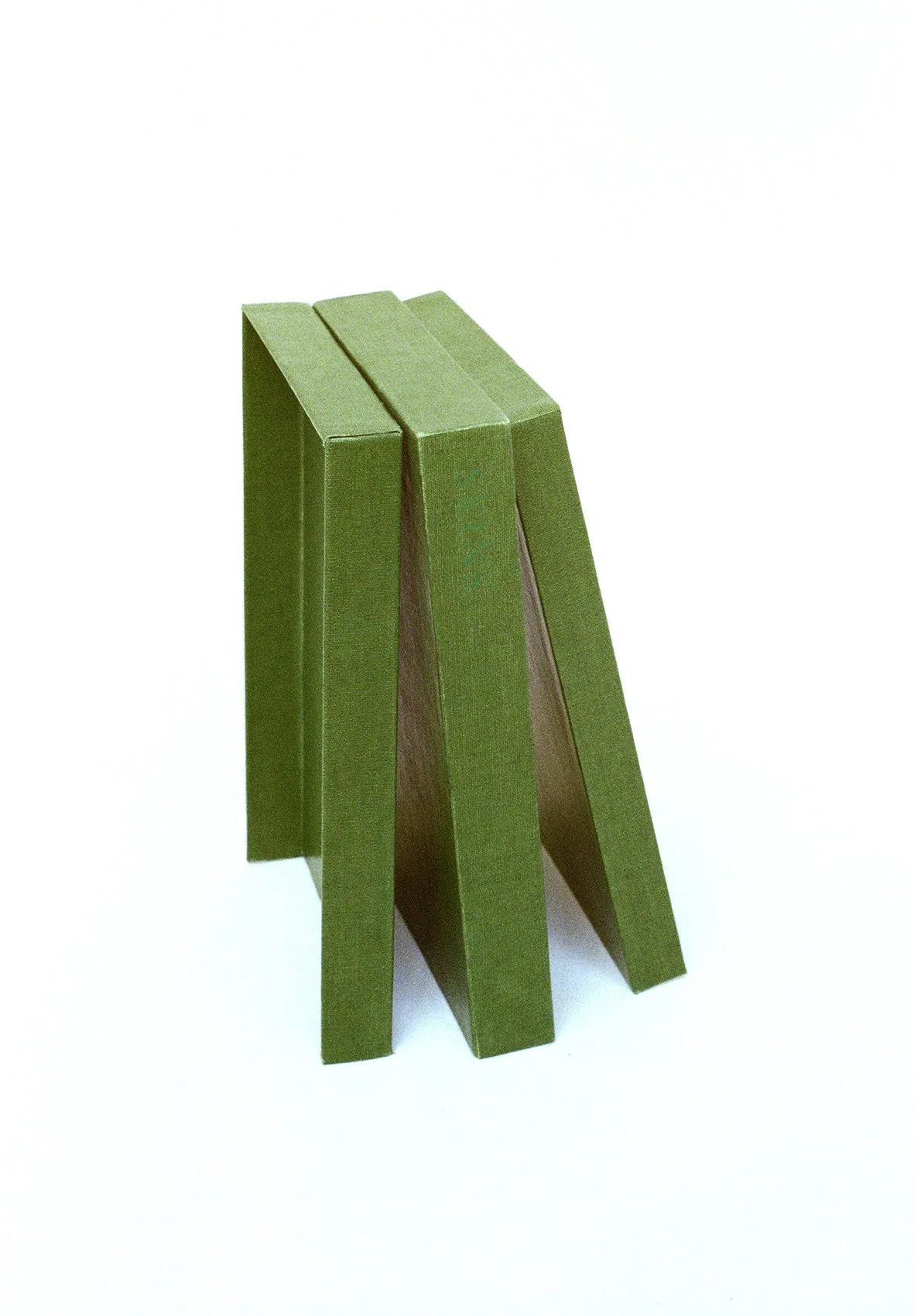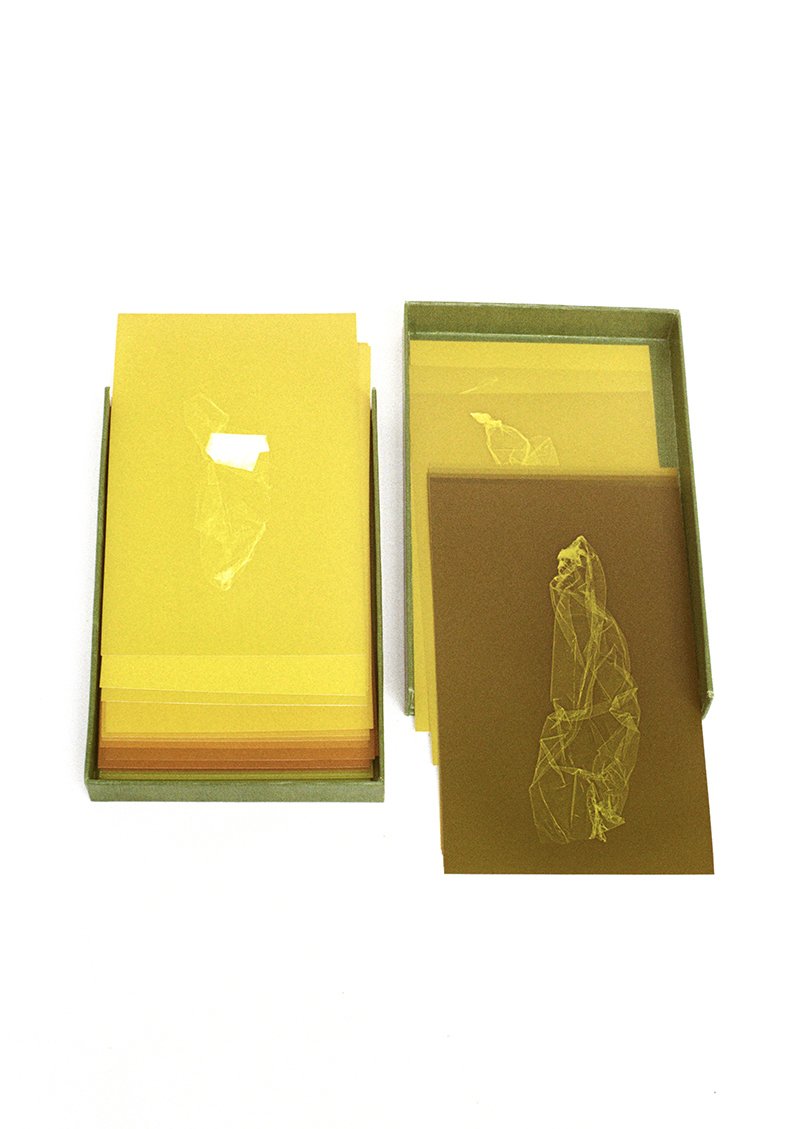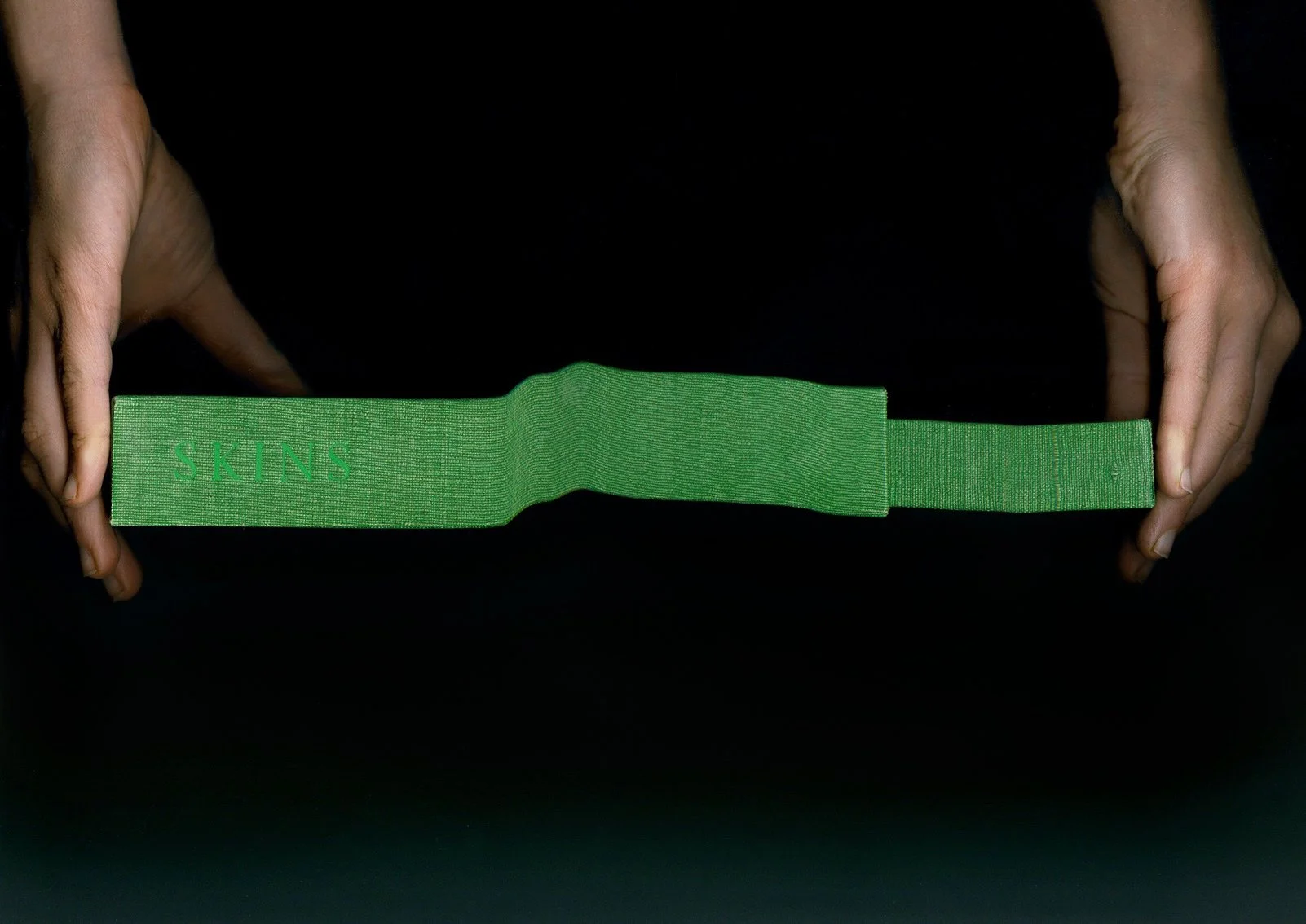
SKINS, 2025
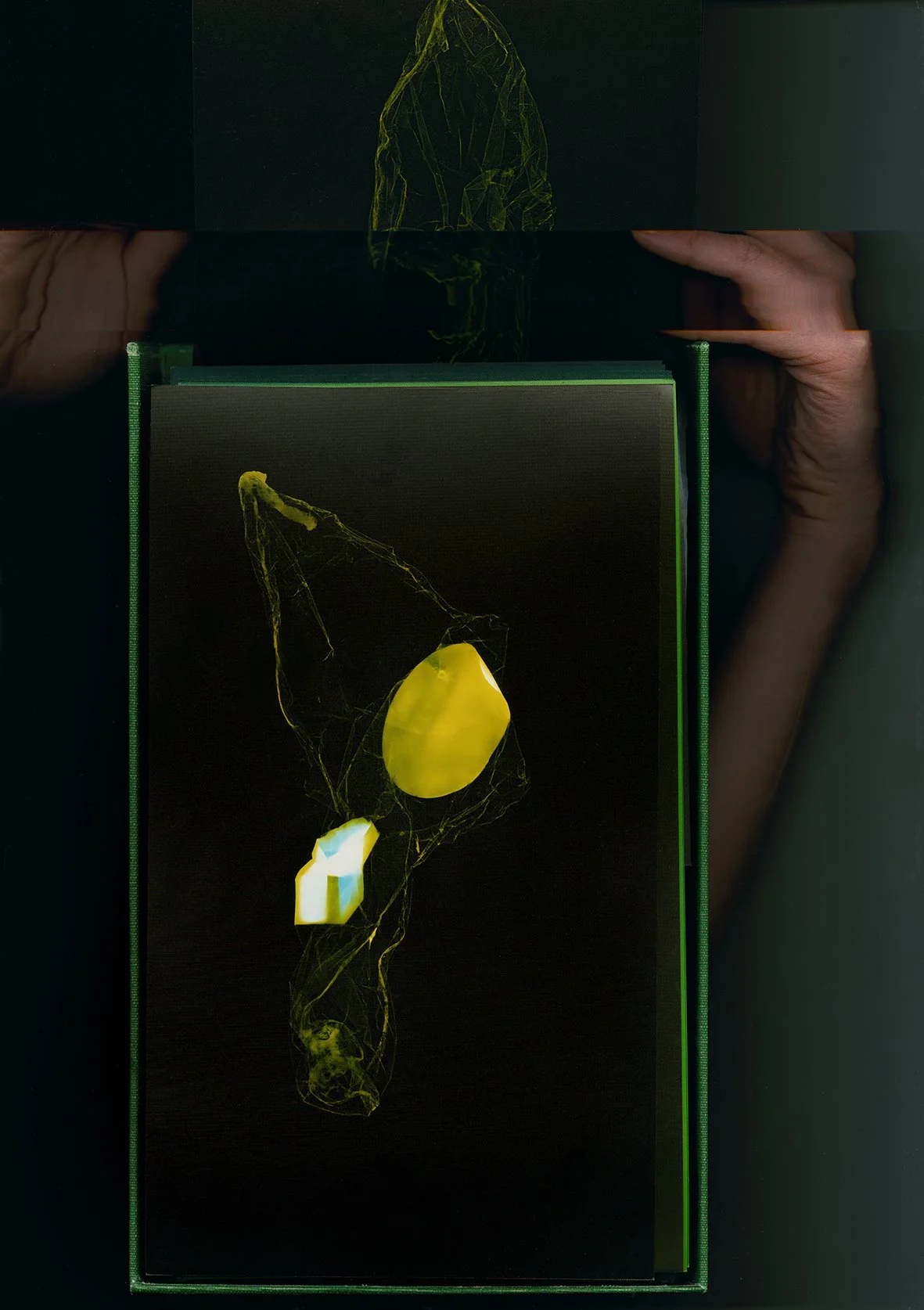
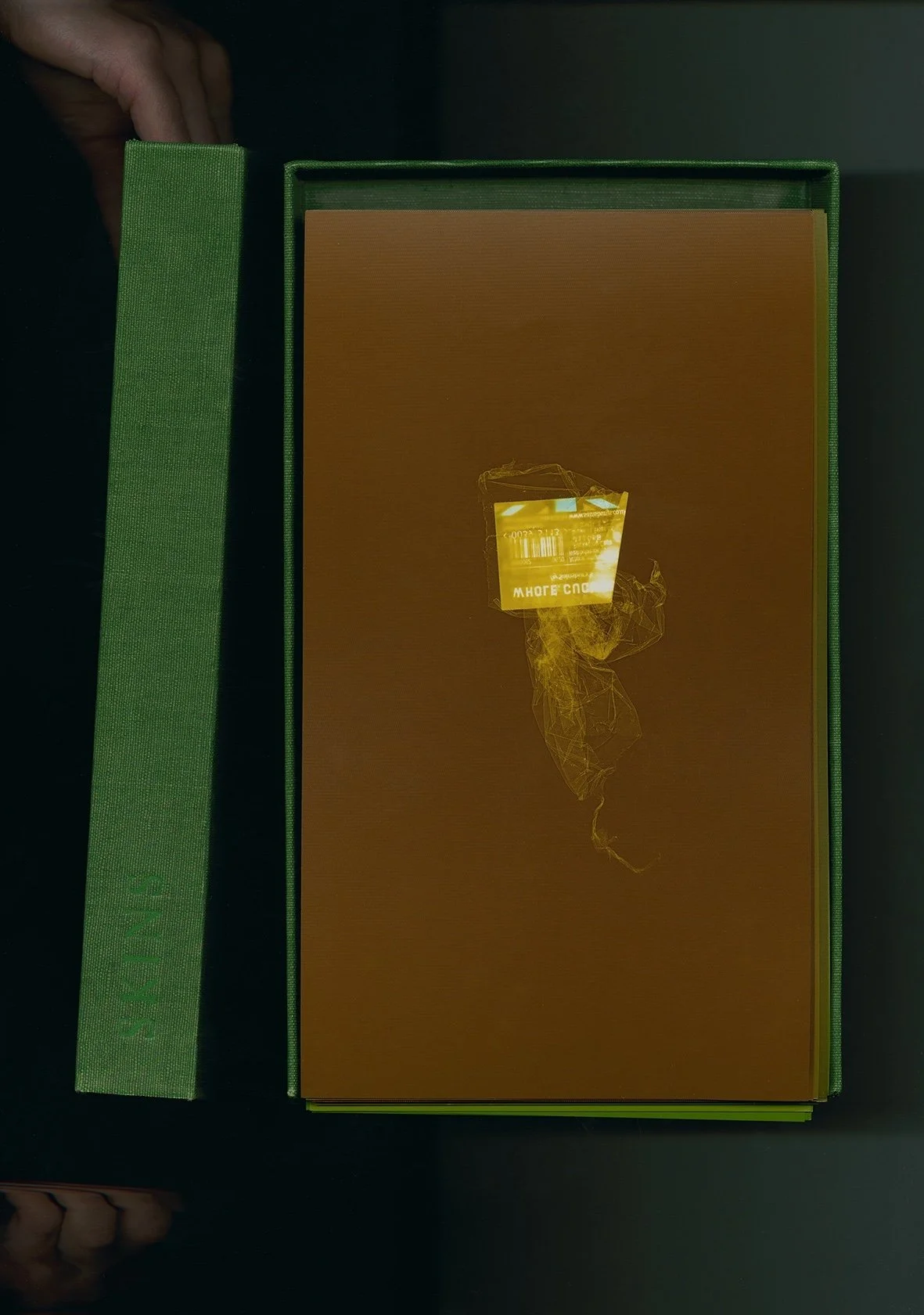
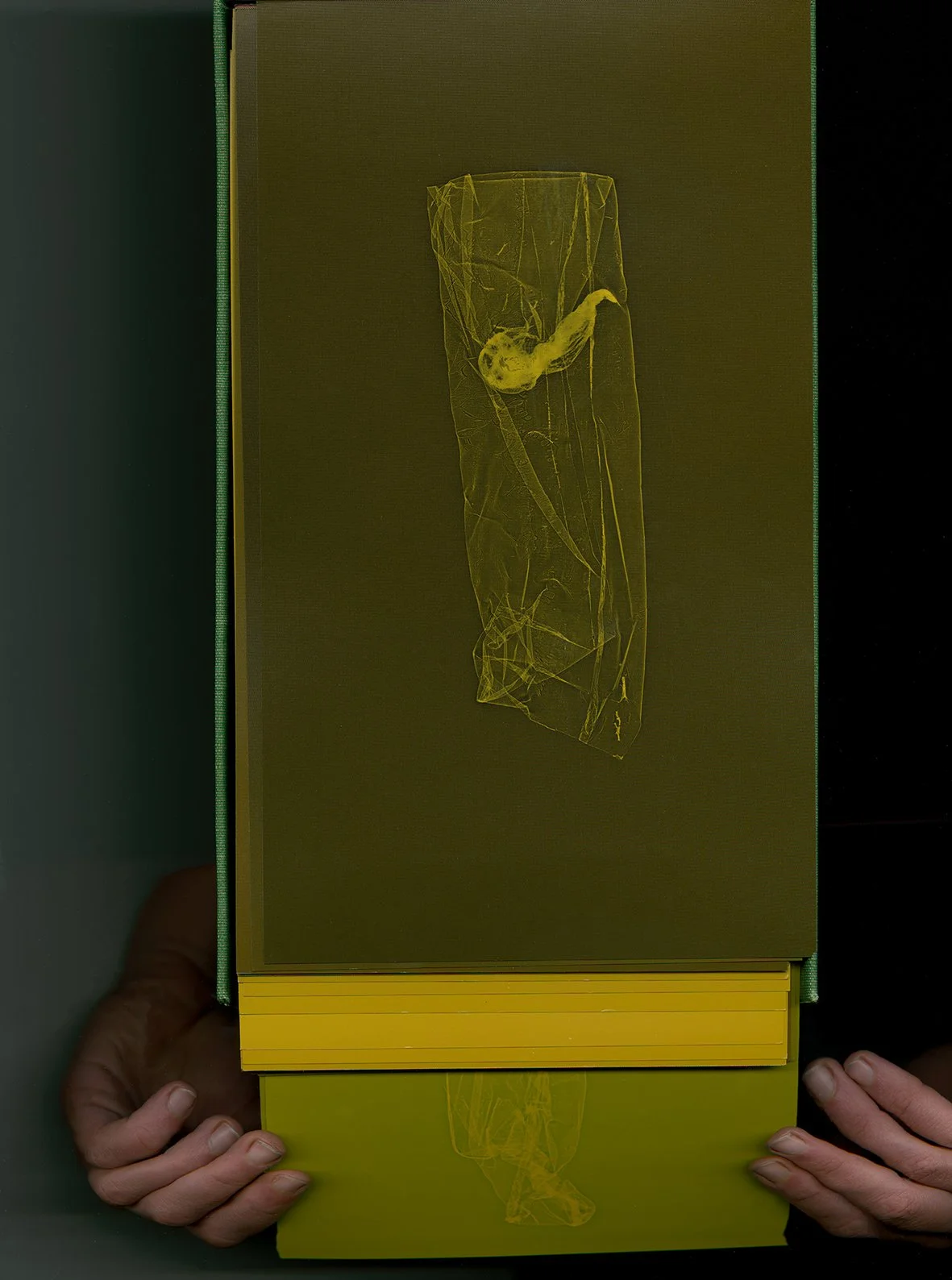
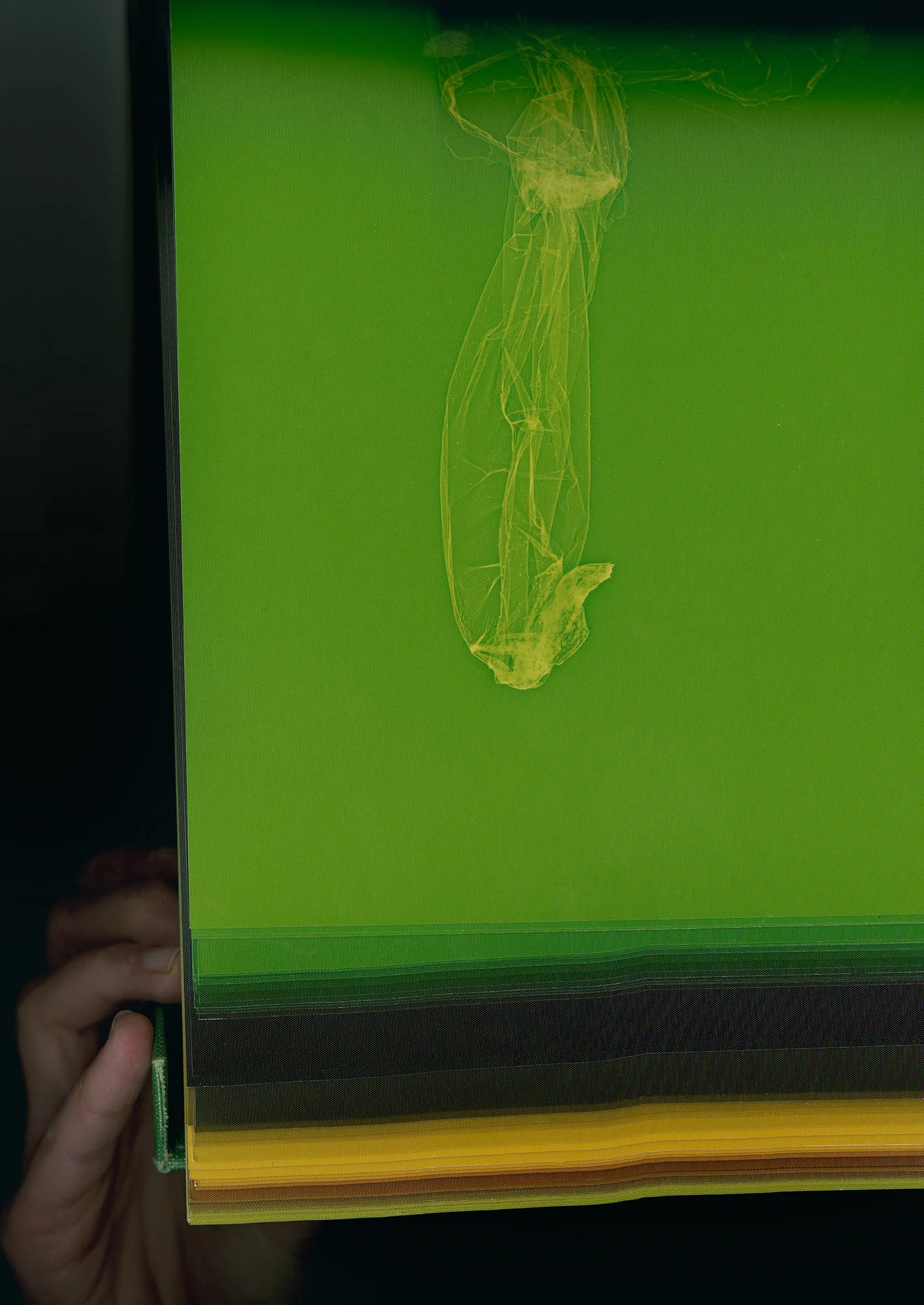
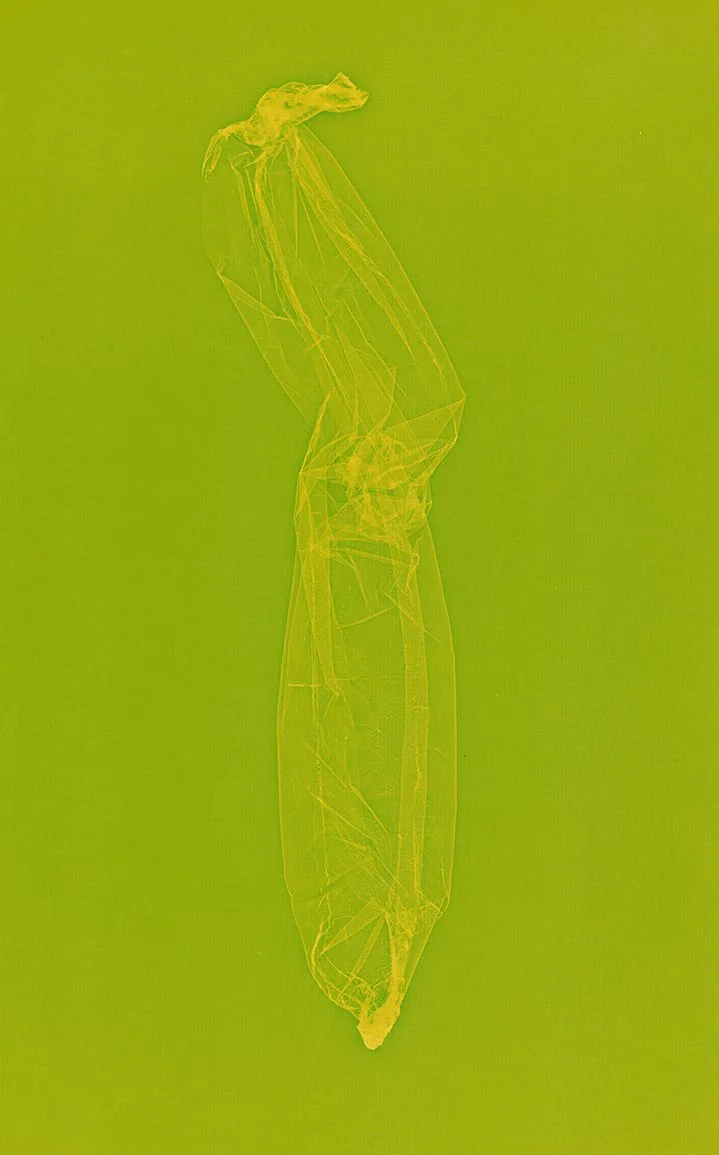
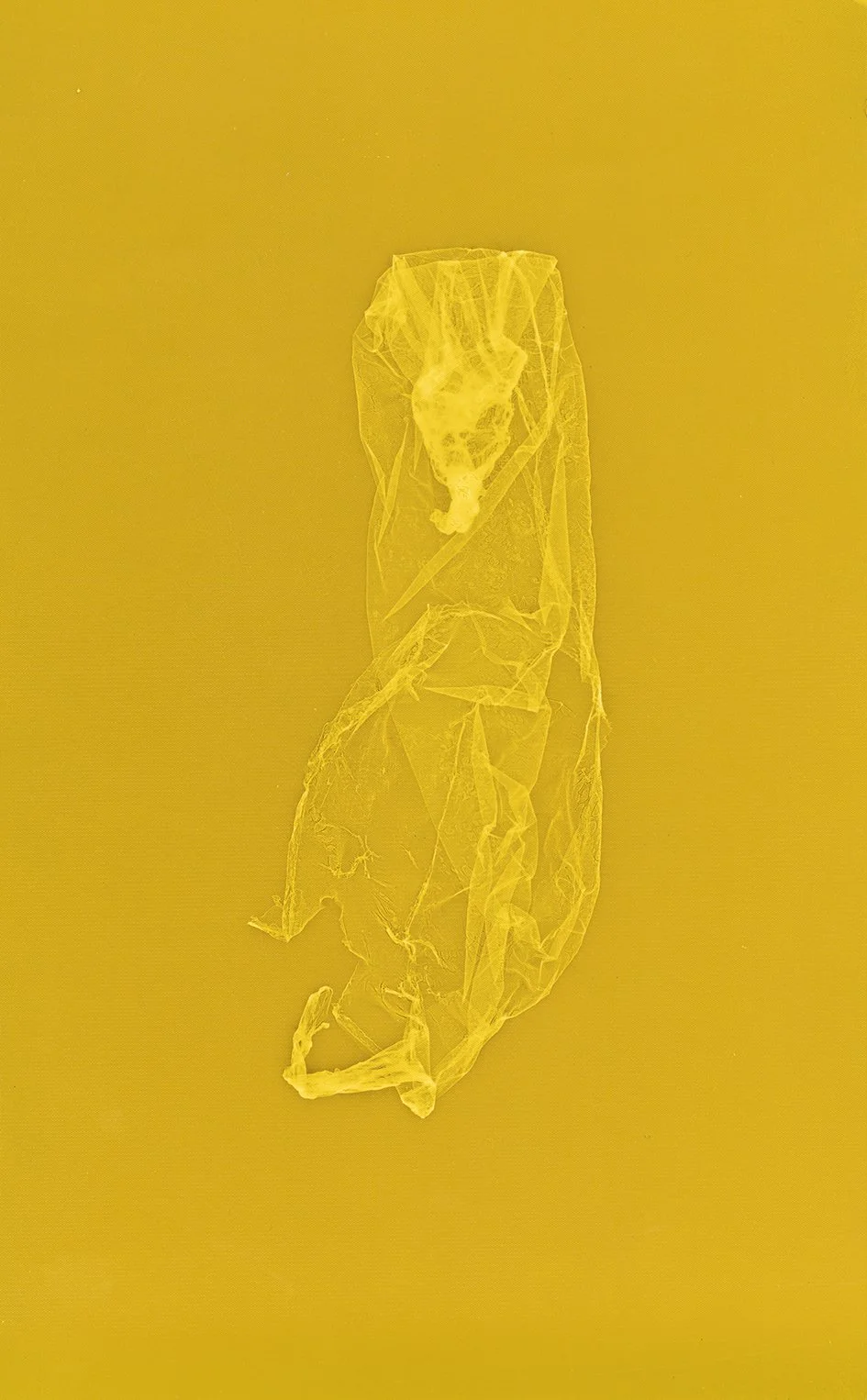
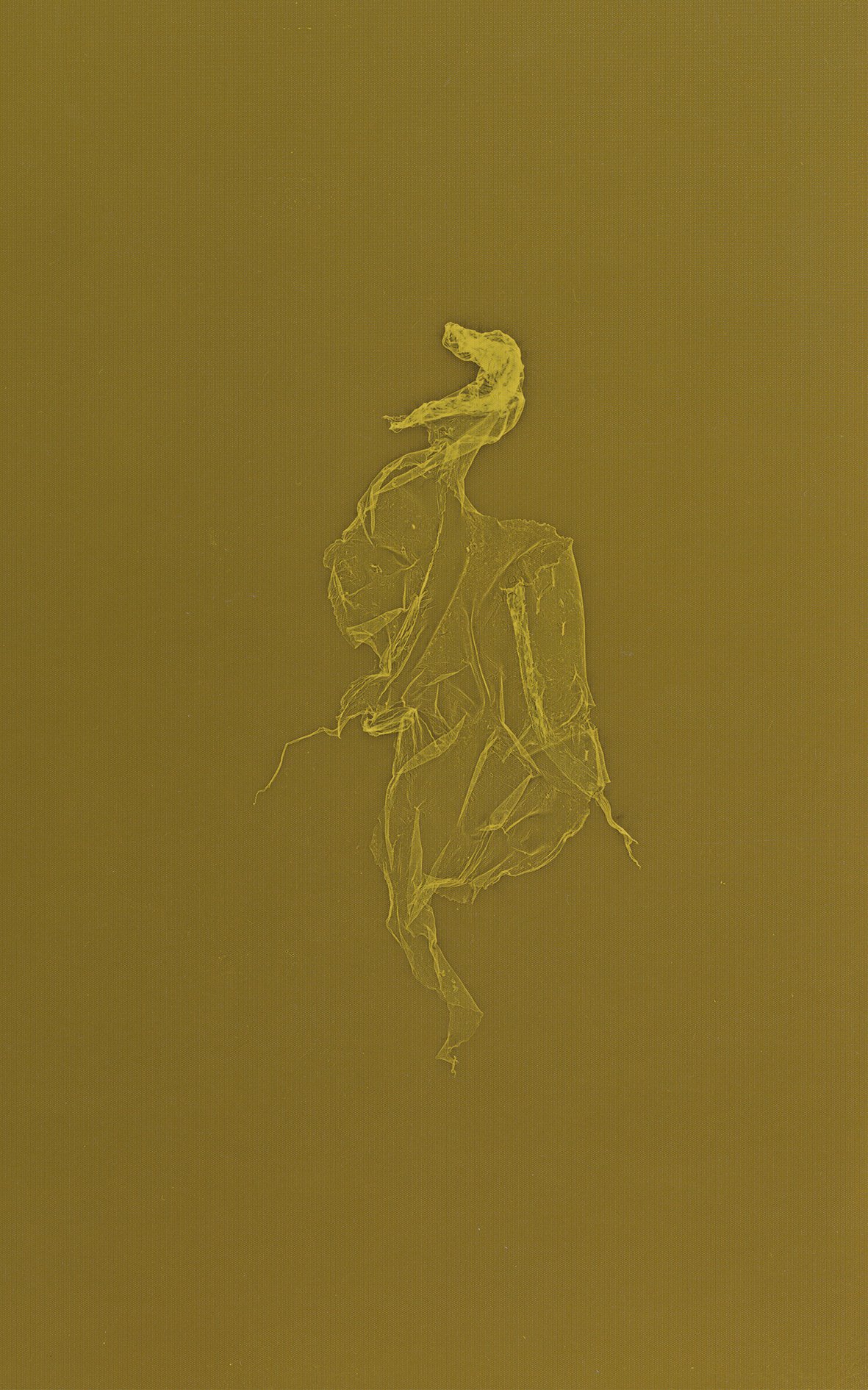
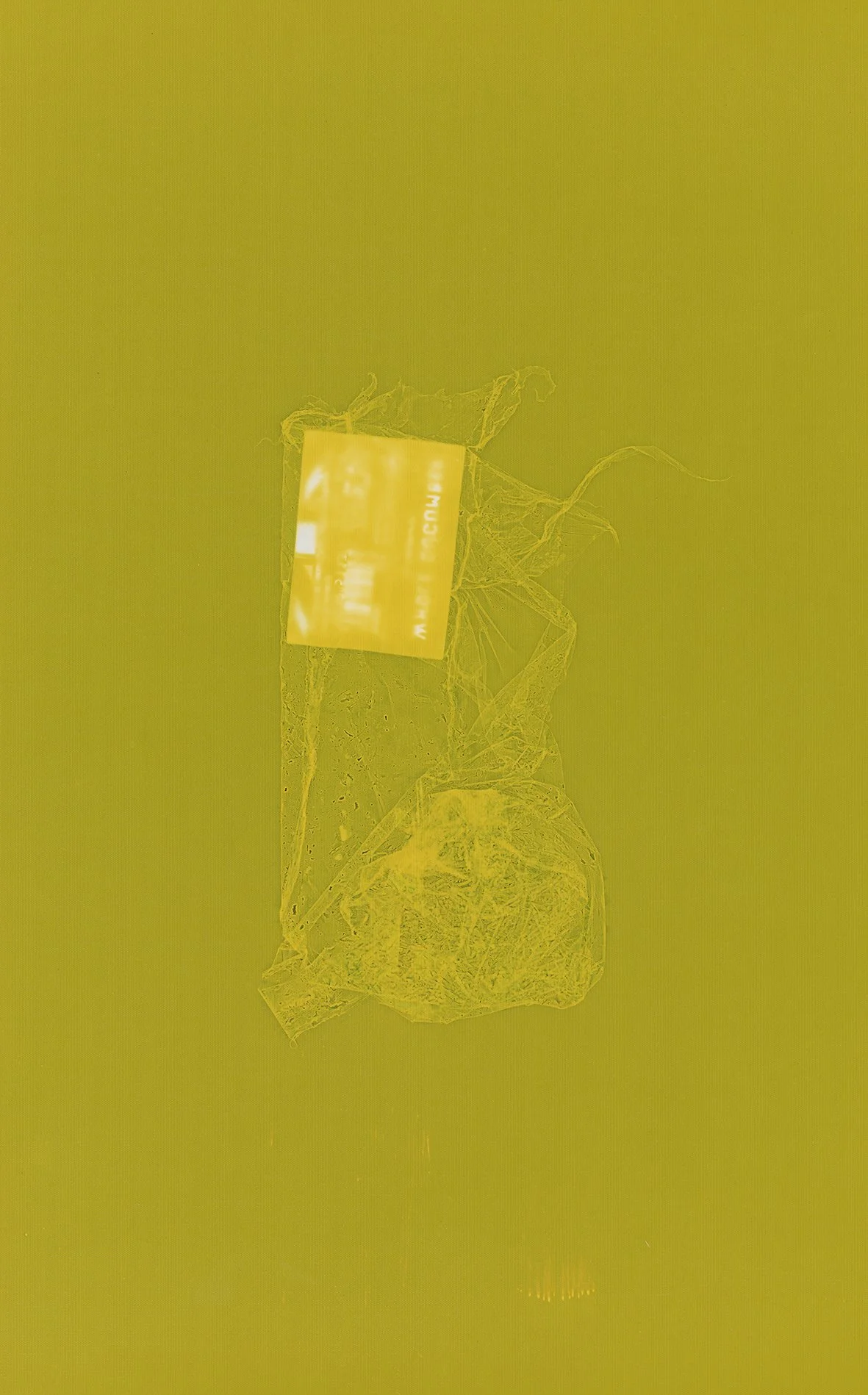
70 unique photograms on expired Kodak endura paper, card, PVA, bookcloth, foil embossed title
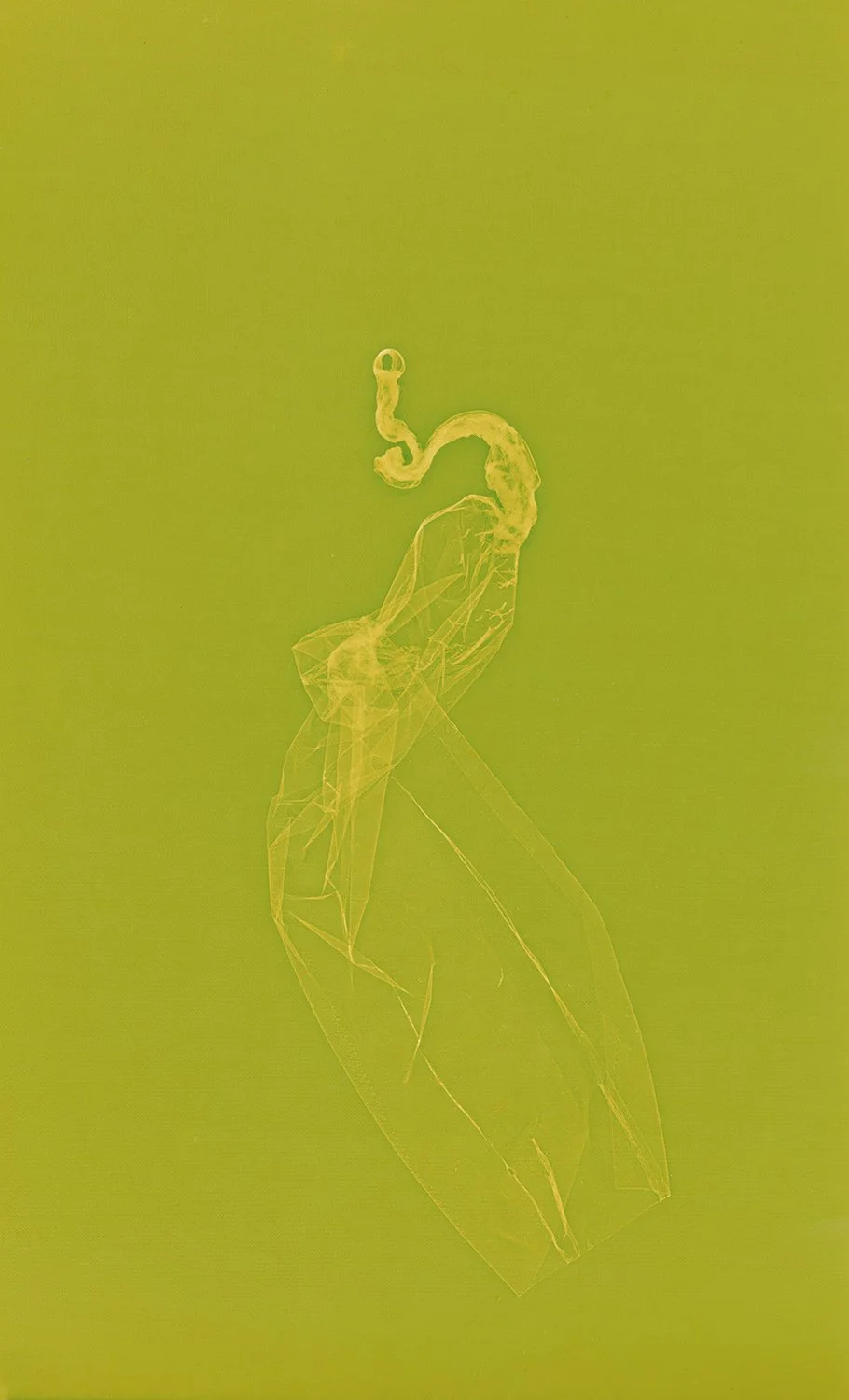
Transparent plastic cucumber wrappers allude to protection, perhaps from contamination, the germ spread of unclean hands, or from natural processes of decay. Growers and retailers have historically defended shrink-wrapping as being a necessary procedure, focusing on the moisture loss and safer transportation for a fruit that contains over 90% water. With prioritisation of protection in shelf life over flavour, and mass production over nutrition - the global food system exerts dichotomies of abundance and waste.
For the course of 10 months I collected these typically discarded materials. From online call-outs to donations from friends, cucumbers I had eaten or from stall holders in Hatton Garden - Each wrapper was exchanged for a photogram copy of itself, chosen by the donor and created as a reciprocal token for their gesture.
This collection of photograms have been made with a found roll of expired photo paper; and with incremental shifts in the colour enlargers settings in the darkroom; going through a colour gradient of what could mean fresh to rotten in the lifecycle of a cucumber.
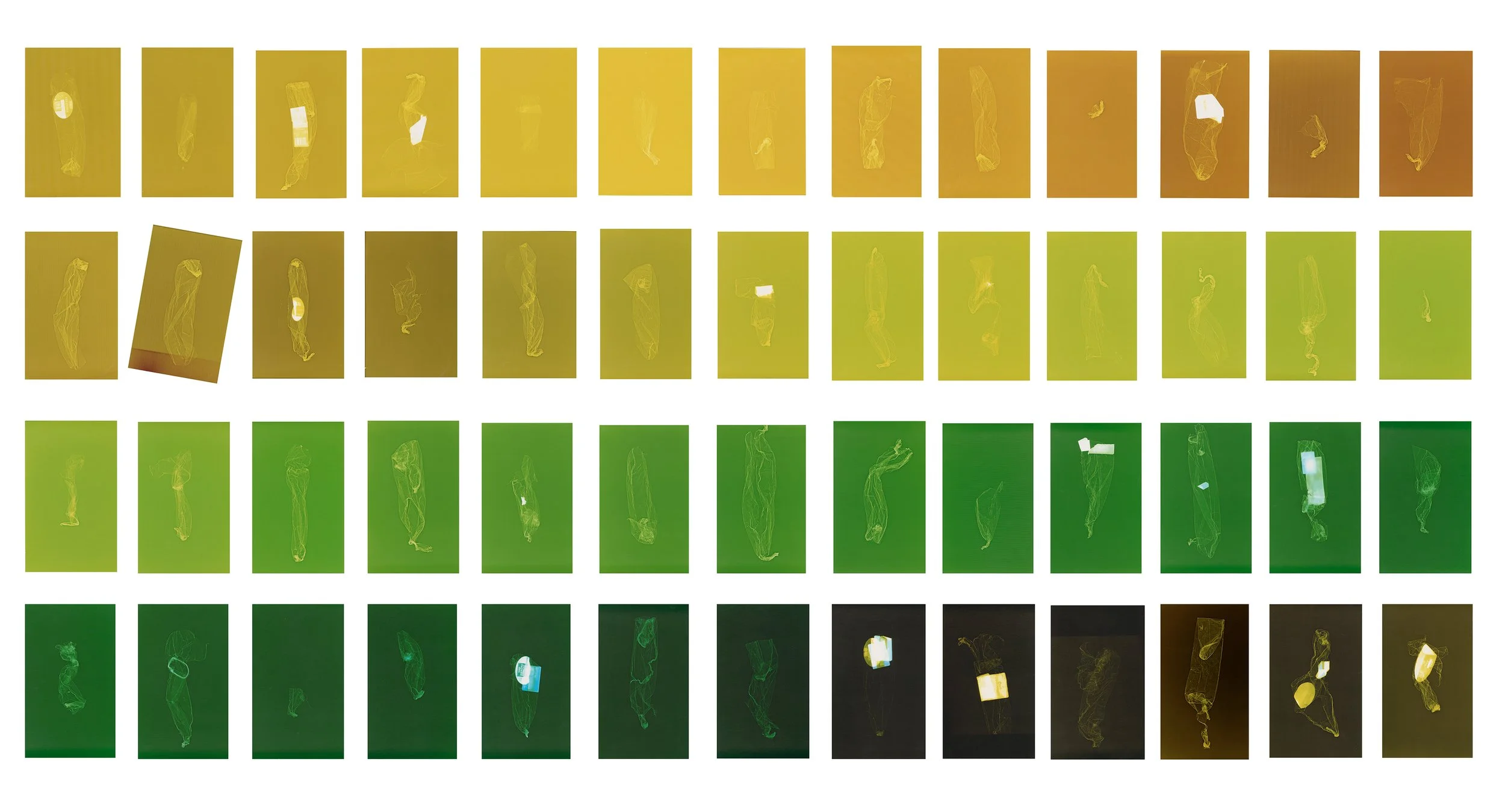
SKINS, 2025
selected photograms on expired Kodak Endura paper